Roman Carthage
Roman Carthage
UNESCO site on the outskirts of Tunis, Carthage brings together the Antonine Baths, villas with mosaics, a Roman theatre and national museum tracing the Punic and Roman civilizations.
The archaeological site of Roman Carthage, on the northern outskirts of Tunis, preserves the remains of one of the great capitals of ancient Africa. Inscribed on the UNESCO World Heritage list since 1979, it encompasses several hectares of monumental baths, villas with mosaics, cisterns, a theatre, Christian basilicas and Punic necropolises. A visit allows you to traverse nearly a thousand years of Mediterranean history, from its Phoenician founding to Byzantine Carthage.
Why visit Roman Carthage
Carthage holds a special place in Mediterranean imagination: Rome's rival during the Punic Wars, it was razed in 146 BC before being refounded by the Romans as a prosperous provincial capital. The site is not concentrated in one location but scattered across several sectors around Byrsa Hill, allowing you to alternate between museum, monumental ruins and views over the Gulf of Tunis.
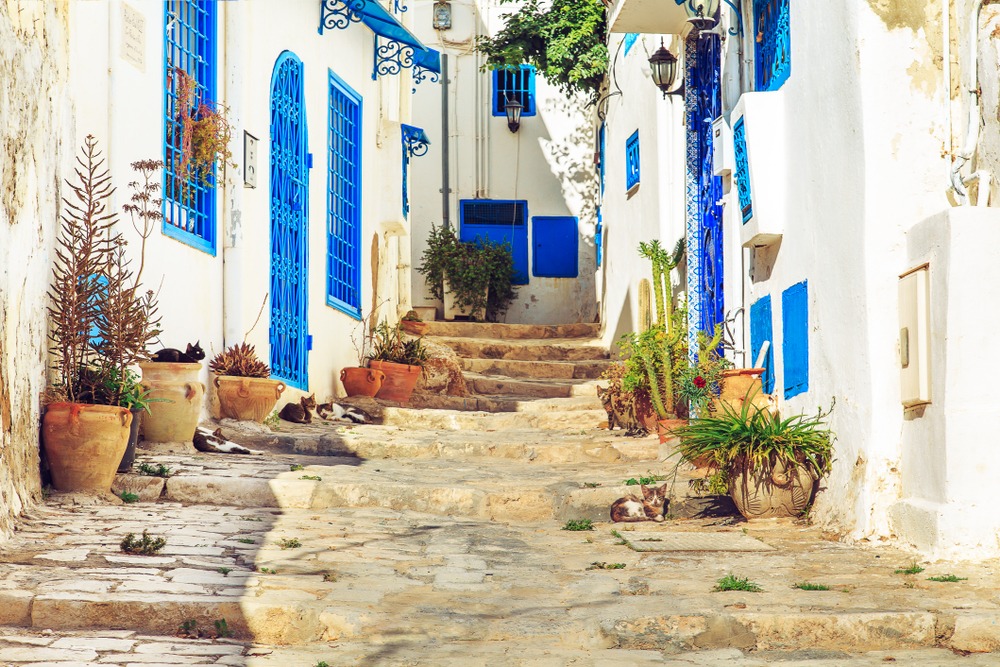
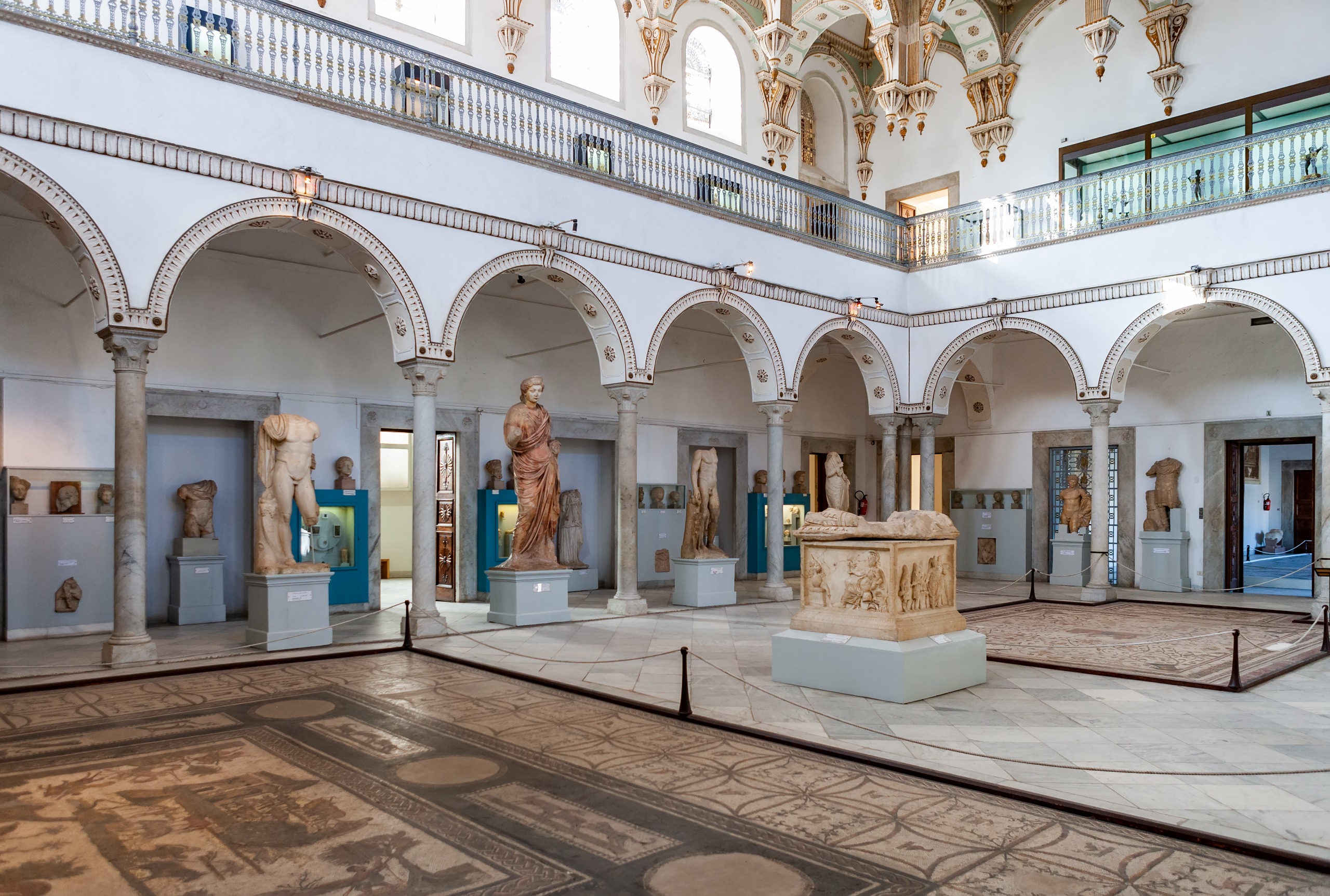
Roman mosaics (the Aviary mosaics, the Wedding of Neptune and Amphitrite, the Lord Julius mosaic) rank among the finest works of Romano-African art. Nearby, the white and blue village of Sidi Bou Saïd and the Bardo Museum, which houses the world's richest collection of Roman mosaics, naturally complement the visit.
History of the site
Carthage was founded by Phoenician colonists from Tyre, traditionally dated to the 9th century BC. Over the centuries, the city became the head of a commercial empire dominating the western Mediterranean, until its confrontation with Rome during the three Punic Wars. Punic civilization collapsed in 146 BC with the city's destruction by Scipio Aemilianus.
Nearly a century later, Emperor Augustus ordered its reconstruction in 29 BC and refounded it under the name Colonia Iulia Concordia Carthago. The Roman city rapidly became the second city of the Latin West after Rome. The main monumental structures were erected between the 1st and 2nd centuries, particularly during the reign of Emperor Antoninus Pius, a period marked by earthquakes and fires followed by reconstruction.
Carthage then became a major center of African Christianity, before the Vandal conquest in the 5th century and Byzantine reconquest in the 6th. The Arab conquest of 698 marked the site's decline as the new capital, Tunis, took precedence. The site, long used as a stone quarry, became the subject of systematic archaeological excavations from 1825 onwards (Falbe, Beulé, then Father Delattre in the late 19th century), work that continues today.
What to see on the site
Byrsa Hill
The historical heart of the city, the hill overlooks the gulf and houses the Saint-Louis Cathedral, a 19th-century building combining Byzantine and Moorish styles, now deconsecrated and used for concerts. Beside it, the National Museum of Carthage (formerly the Lavigerie Museum) displays Punic and paleochristian collections on the acropolis: stelae, sarcophagi, ceramics and mosaic fragments.
The Antonine Baths
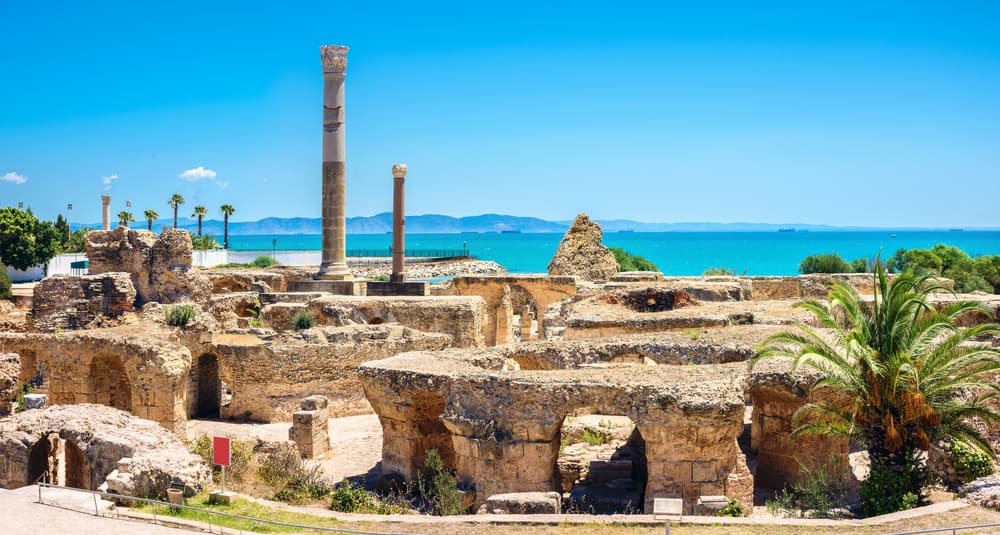
Built in the 2nd century facing the sea, the Antonine Baths constitute the largest Roman thermal structure built in African territory. Only their foundations remain, but their monumental proportions — toppled columns, swimming pools, vaulted halls — give the measure of imperial Carthage's refinement.
Odeon Hill and the Roman Theatre
This sector groups together the ruins of patrician villas with mosaics and a 2nd-century Roman theatre, restored to host performances. Close by, the Christian Basilica of Damous El Karita (derived from Domus Caritatis) hosts the International Festival of Carthage each summer.
The Magon Quarter
The ruins of Magon correspond to an ancient residential quarter by the sea, illustrating the stratification of successive Roman reconstructions. A small antiquarium on site displays ceramic fragments and decorative stuccos from excavations.
The Tophet of Salammbô
The Tophet is an open-air Punic sanctuary, organized as burials containing urns with the ashes of children and young animals. The exact meaning of these deposits (ritual sacrifices or burials of infants) remains debated by scholars. The austere location is one of the rare direct testimonies to Carthaginian religion.
The Malga Cisterns
The Malga Cisterns (Mâalga) form an impressive alignment of vaulted reservoirs that supplied the city with water and notably fed the Antonine Baths via the Zaghouan aqueduct. It is one of the best-preserved Roman hydraulic complexes in the Maghreb.
The Salammbô Oceanographic Museum
Away from the ruins, this museum features aquariums, fossils and skeletons across a dozen thematic rooms devoted to protected species, the Tunisian coastline and fishing techniques. A worthwhile stop for families, complementing the archaeological visit.
Practical Information
- Combined ticket: a single ticket grants access to all archaeological sectors and the National Museum of Carthage. Moderate price.
- Duration of visit: allow a minimum of half a day for the main sites, a full day to cover everything including the museum.
- Opening hours: the site is accessible year-round, with extended hours in the summer season. Verify days of closure before departure.
- What to bring: closed-toe shoes, water, hat and sunscreen. Shade is rare in the excavation areas.
When to visit
Spring (March to May) and autumn (September to November) offer the best visiting conditions: mild temperatures, clear light for photography, moderate crowds. Summer is very hot and poorly suited for walking between sectors, but it is also the season of the International Festival of Carthage, which takes over the Roman theatre in July and August. Winter remains accessible, with cool days and occasional rain.
How to get there
Carthage is located about twenty kilometers northeast of Tunis. The simplest option remains the small TGM train (Tunis–Goulette–Marsa), which serves several stations named after the archaeological sectors (Carthage-Hannibal, Carthage-Byrsa, Carthage-Salammbô…). From the village of Sidi Bou Saïd, access is quick by TGM or taxi. From central Tunis, allow approximately 30 to 40 minutes travel time.
Nearby
- Sidi Bou Saïd: perched white and blue village, to be systematically combined with Carthage.
- Bardo Museum, in Tunis: the world's largest collection of Roman mosaics, essential to complement the site.
- Bulla Regia: another Roman city in Tunisie, famous for its underground villas, approximately 2.5 hours drive away.
Frequently Asked Questions
Frequently asked questions
Half a day is enough for the main sites (Byrsa, Antonine Baths, theatre). To explore all sectors and include the national museum, allow a full day.
Yes, a combined ticket grants access to all archaeological sectors and the National Museum of Carthage. Keep it throughout your visit.
Yes, the site has been inscribed on the UNESCO World Heritage list since 1979, for its Punic, Roman, paleochristian and Byzantine remains.
Yes, English-speaking guides are available at the entrance to Byrsa and the museum. Given the dispersal of the remains and historical richness, accompaniment is recommended for a first visit.
This is the most common itinerary. The two sites are linked by TGM in a few minutes. Many visitors do Carthage in the morning and finish the afternoon at Sidi Bou Saïd.
Plan your trip
Carthage fits naturally into a circuit around Tunis and the north of the country. To build an itinerary including the site, the Bardo and coastal cities, consult our bespoke journeys in Tunisie.
Nearby
Interested in this visit?
We can include it in your personalised itinerary.