21 articles to prepare your trip
Site Archéologique De Carthage
Founded around 814 BC by Phoenicians, Carthage layers Punic, Roman and Byzantine remains across several hills overlooking the Gulf of Tunis. Accessible by TGM light rail from downtown.
Surrounded by 9th-century ramparts, Sfax medina preserves an intact medieval urban fabric with its specialized souks, Grand Mosque and courtyard homes. An authentic immersion far from mass tourism circuits.
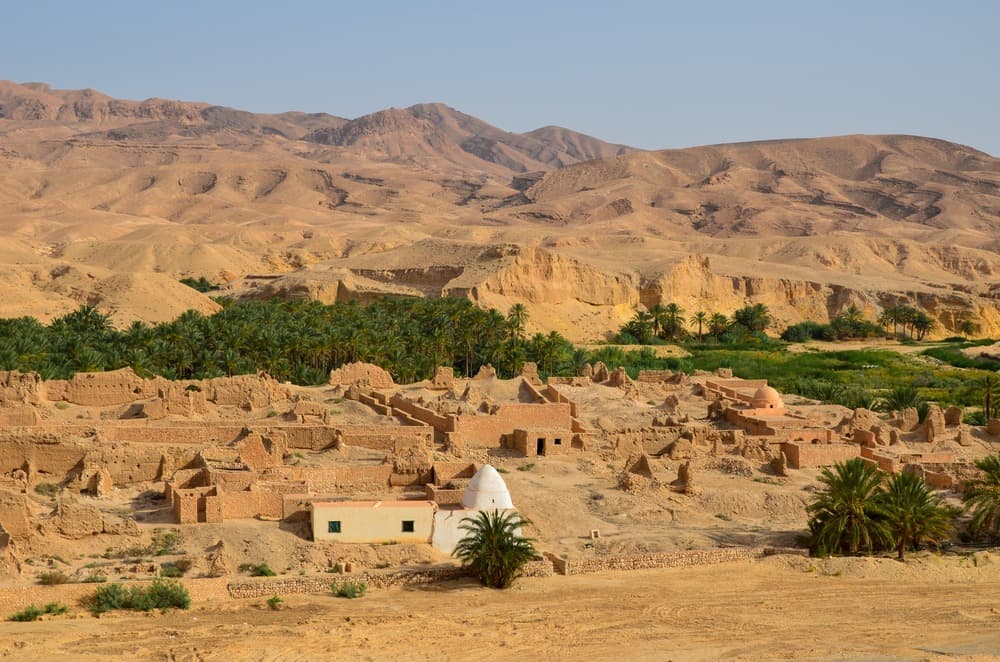
Ouled el-Hadef, the historic heart of Tozeur, reveals ochre brick facades with raised geometric patterns, testament to Djerid architecture spanning several centuries.
Around 60 km from Tunis, Thuburbo Majus reveals a remarkably preserved Roman forum, Capitol, and baths. A major archaeological site of Proconsular Africa, ideal to combine with Zaghouan.
The Tophet of Carthage is an open-air Punic sanctuary in Carthage-Salammbô near Tunis. Stelae bearing the sign of Tanit and burial urns testify to centuries of Phoenician rituals still debated by archaeologists.
The Barber's Mosque, or Zaouïa of Sidi Sahbi, houses the mausoleum of a Companion of the Prophet in Kairouan's medina. Its courtyards adorned with zellige tiles and carved stucco make it one of Tunisia's most refined decorative spaces.
Mides Canyon carves through ochre rock at the Algerian border, edging an abandoned village suspended above the void. One of the most striking landscapes in southern Tunisie.
Surrounded by 9th-century ramparts, Sfax Medina preserves an intact medieval fabric with its specialized souks, Grand Mosque and courtyard houses — far from the tourist crowds of the major medinas in the north.
Founded in 670 by Okba ibn Nafi and enlarged under the Aghlabids, the Great Mosque of Kairouan is one of Africa's oldest Islamic monuments. Its square minaret, ancient columns and 9th-century mihrab make it an exceptional UNESCO World Heritage site.
Perched on Byrsa Hill, the Carthage National Museum brings together Punic stelae, anthropoid sarcophagi and Roman mosaics. Allow 1.5 to 2 hours to traverse a thousand years of Mediterranean history, with views over the Gulf of Tunis.
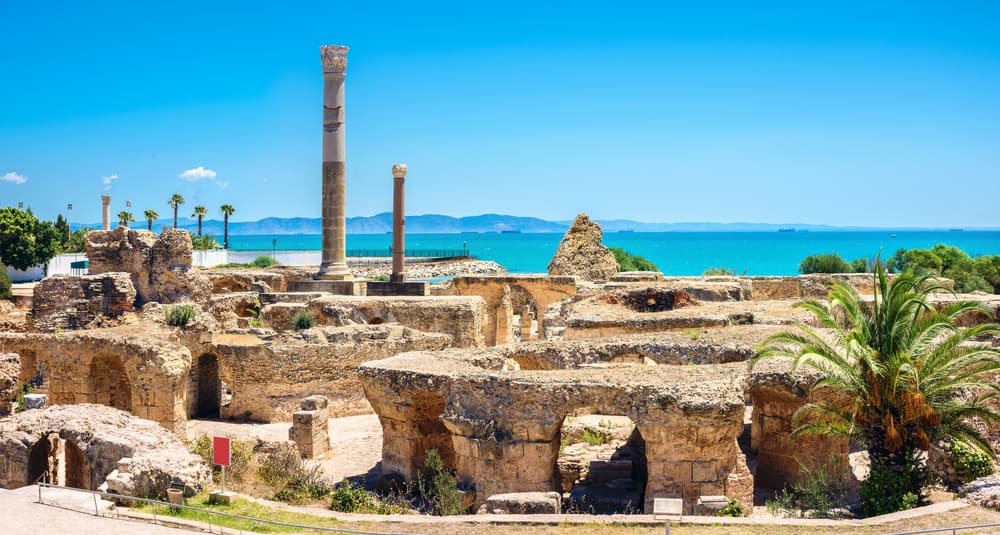
Facing the Mediterranean, the Antonine Baths are the best-preserved remains of a Roman thermal complex in North Africa. A UNESCO World Heritage site in Carthage, 30 minutes from Tunis by TGM light rail.
Located 50 km from Tozeur, Tamerza oasis combines palm groves, waterfalls, a canyon and the ruins of a village abandoned after the 1969 floods.
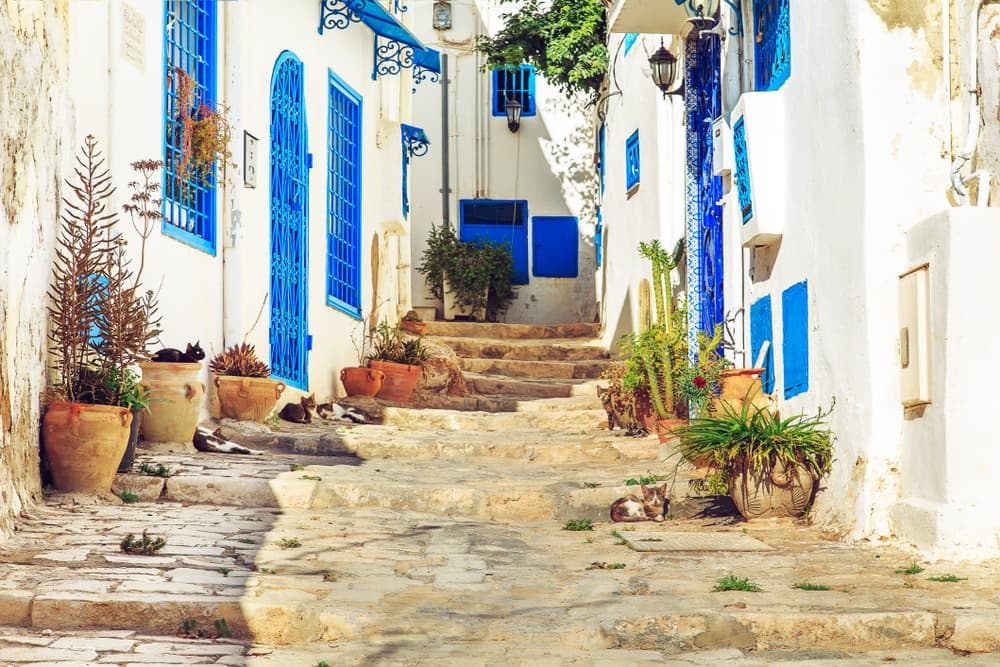
Sidi Bou Saïd
About 20 km from Tunis, Sidi Bou Saïd blends Arab-Andalusian architecture, white and blue facades and views over the Gulf of Tunis and Carthage.
UNESCO site on the outskirts of Tunis, Carthage brings together the Antonine Baths, villas with mosaics, a Roman theatre and national museum tracing the Punic and Roman civilizations.
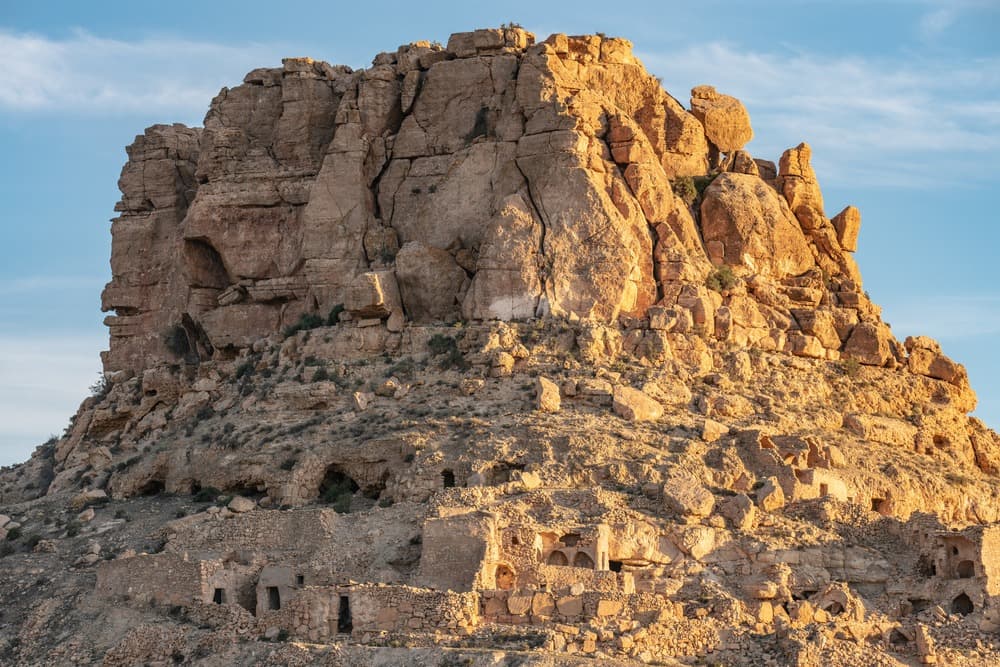
Guermassa
A former fortified Berber village in the Dahar, Guermassa combines a 12th-century ksar, troglodytic dwellings and a 1940s mosque, some thirty kilometers from Tataouine.
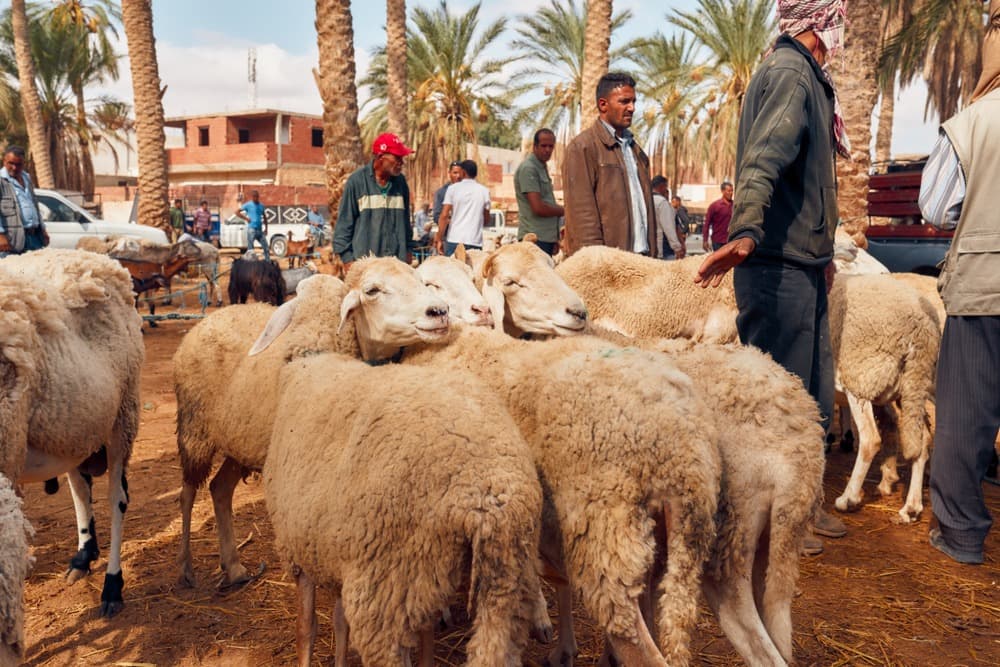
Every Thursday morning in Douz, shepherds from the Grand Erg oriental gather around an ever-active livestock market, far from conventional tourist circuits.
Musée du Sahara de Douz
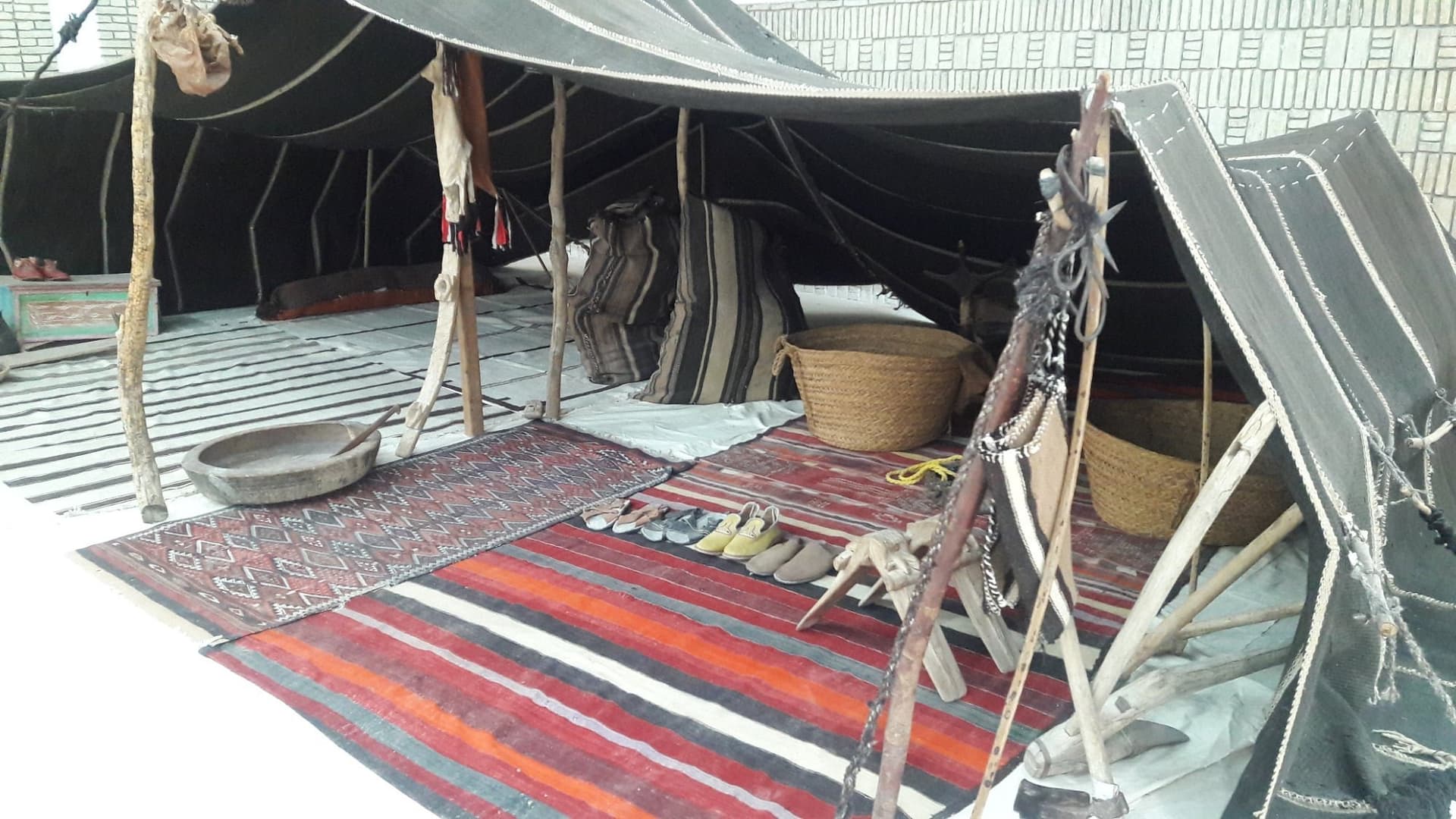
Established in 1997 in an Andalusian-style building, the Douz Sahara Museum documents nomadic and oasis life between the Grand Erg Oriental and Chott El-Jérid.
Chenini
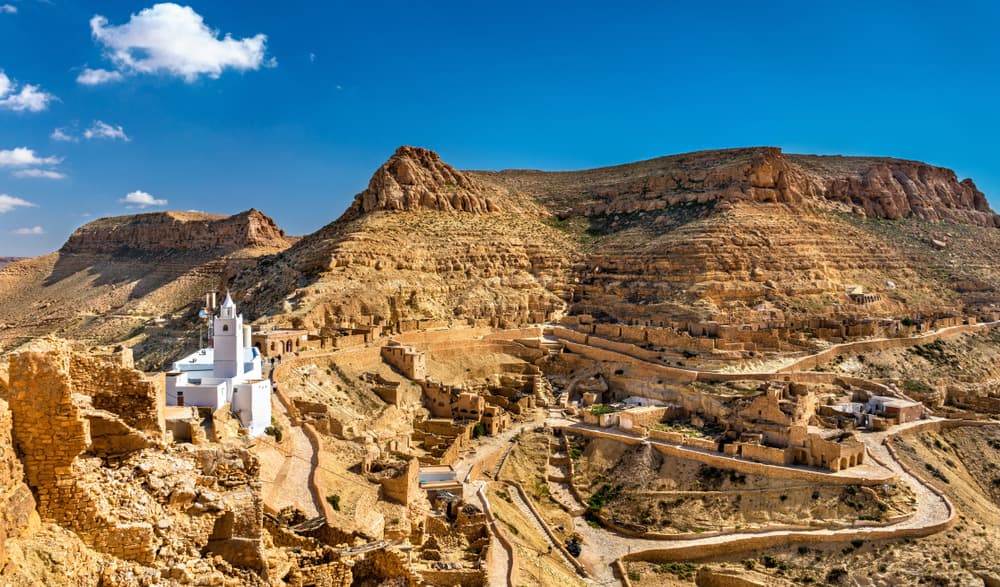
Troglodytic Berber village 18 km from Tataouine, Chenini lines up 12th-century ksour, a perched white mosque and legendary tombs on a rocky ridge.
18 of 21 results
We use cookies to improve your experience and measure our site's audience. You can choose what you accept. Learn more.