Bardo Museum
Bardo Museum
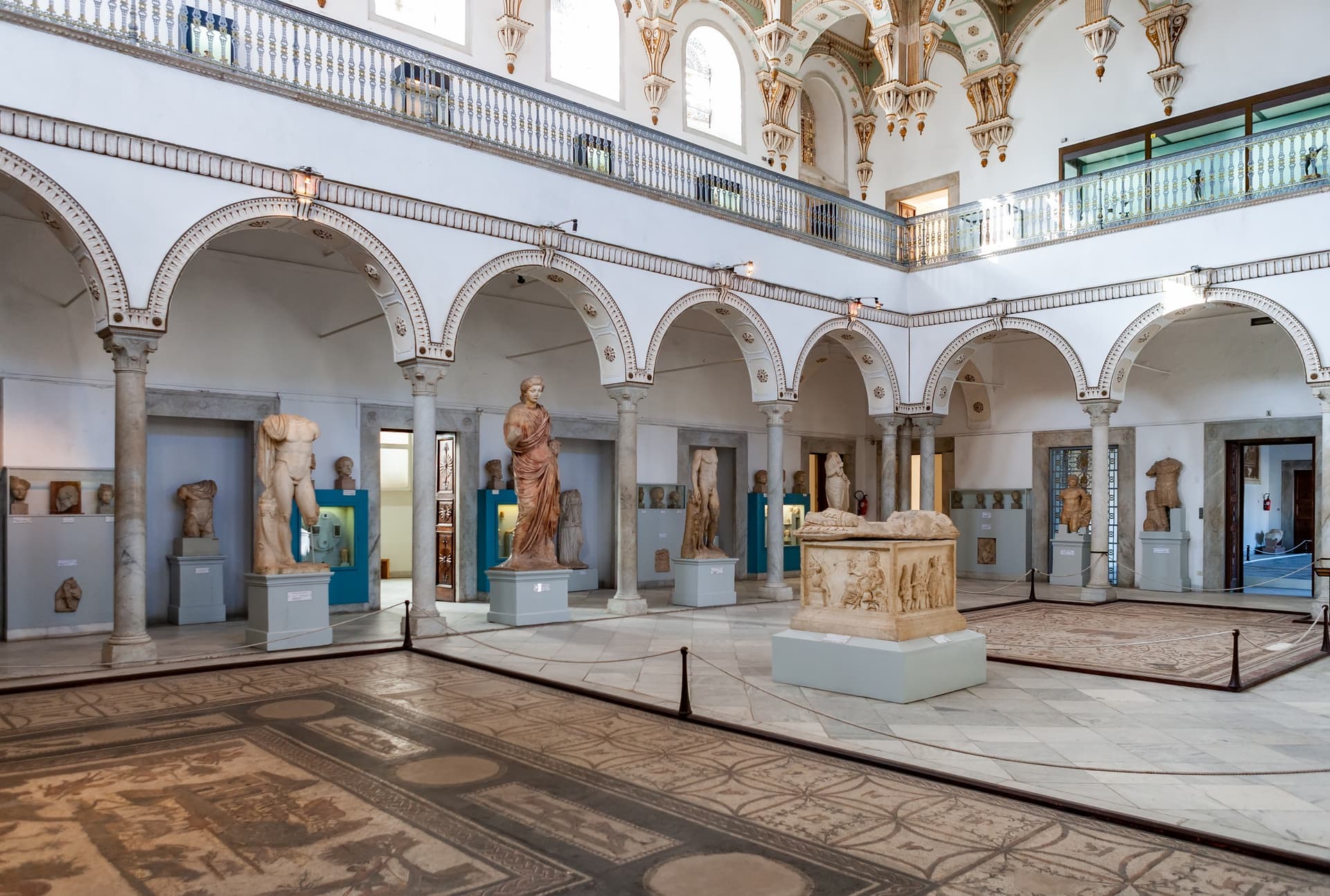
Located in a beylical palace in Tunis, the Bardo Museum preserves Roman mosaics from Carthage, Dougga, Sousse and El Jem across fifty rooms.
The Bardo National Museum, housed in a pavilion of the Beylical Palace in Tunis, holds one of the most comprehensive collections of Roman mosaics in the Mediterranean basin. Founded in 1882, it brings together in about fifty rooms artifacts from Tunisia's major archaeological sites: Carthage, Sousse, Dougga and El Jem.
Why visit the Bardo Museum
The Bardo is one of North Africa's oldest museums. Its main appeal lies in its Roman mosaics, whose collection ranks among the world's most extensive thanks to the density of ancient sites excavated in Tunisie. Beyond the mosaics, the tour traces several millennia of Tunisian history, from prehistoric times to the Islamic era, within a remarkable architectural setting: a former 19th-century beylical palace, partially preserved with its carved ceilings, tilework and courtyards.
The museum also holds memorial significance. The terrorist attack of March 18, 2015, which claimed 22 lives among visitors, left a deep mark on the place. It has since reopened and security has been reinforced.
Museum history
The museum was created in 1882 within the grounds of the Beylical Palace of Bardo, the former residence of Tunis's beys. It welcomed its first archaeological collections in 1885 and was officially inaugurated on May 7, 1888 under the name Musée Alaoui, in reference to the reigning bey Ali III Bey. The current name took hold after independence.
Over the decades, collections grew alongside excavations conducted at the country's Punic and Roman sites, forcing the museum to gradually occupy additional palace rooms. A fire in 1984 damaged one building, which remained closed to the public until 2000.
A major renovation and expansion campaign launched in 2009 and completed in spring 2012. It doubled the exhibition space, modernized the museum layout and enabled the Bardo to rank among the Mediterranean's leading institutions.
On March 18, 2015, a terrorist attack targeting visitors claimed 22 lives. The museum reopened quickly and has since remained a symbol of Tunisian cultural resilience.
What to see at the Bardo
The tour is organized into four departments spread across about fifty rooms and galleries, following a continuous chronology.
Roman mosaics
This is the museum's main highlight. The pieces come from Tunisia's major ancient sites:
- Carthage: domestic scenes, portraits, marine mosaics
- Sousse (Hadrumète): figured ensembles and the famous Triumph of Bacchus
- Dougga: geometric and mythological pavements
- El Jem: large-scale compositions from wealthy villae
The mosaic known as the Poet Virgil, considered the only known ancient portrait of the author, ranks among the museum's most visited pieces.
The Punic department
Stelae, statuettes, terracotta masks and funerary objects from Carthage and the Punic necropolises along the coast. This section illuminates Phoenician civilization before Roman dominance.
The Christian and Byzantine department
Sarcophagi, baptismal fonts and liturgical mosaics testify to the importance of Christian Africa between the 4th and 7th centuries.
The Arab-Islamic department
Ceramics, manuscripts, Kairouan funerary stelae and liturgical objects trace Tunisian Islamic art from the Aghlabid period onward. The palace's state rooms, with their original décor, complement this section.
Practical information
- Visit duration: allow 2 to 3 hours for a complete tour, 1.5 hours for the essentials.
- Opening hours: open year-round except public holidays. Hours vary between summer and winter seasons; check before your visit.
- Admission fees: modest entrance fee, possible supplement for photography. Student reductions and special rates for groups available.
- Guided tours: English-speaking guides available on-site or through Tunis travel agencies.
- Accessibility: the museum is partially accessible for people with reduced mobility following the 2012 renovations.
How to get there
The museum is located in the Bardo municipality, about 4 km west of downtown Tunis.
- By light metro: TGM line 4 serves the Le Bardo station directly, a few minutes' walk from the entrance. This is the easiest option from Place Barcelona in Tunis.
- By taxi: quick journey from the medina or Habib Bourguiba Avenue, expect 15 to 20 minutes depending on traffic.
- By car: parking available near the museum.
What to see nearby
The Bardo combines well with other visits in the Tunis region:
- The medina of Tunis, UNESCO-listed, for its souks and Ottoman palaces
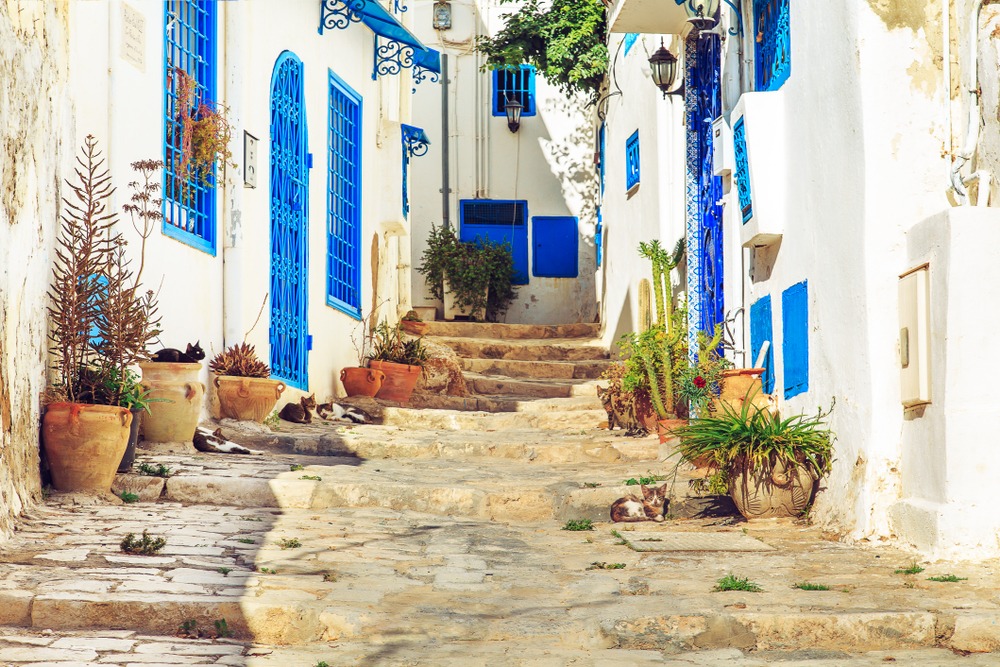
- Sidi Bou Saïd, the blue and white village overlooking the Gulf of Tunis
- The archaeological site of Carthage, from which many of the mosaics displayed at the Bardo originate
- Bulla Regia, a Roman city with underground houses, to extend your ancient discovery
Frequently asked questions
Frequently asked questions
Allow 2 to 3 hours for a complete tour including all four departments. A focused visit on Roman mosaics can be done in 1.5 hours.
Yes. Security measures have been greatly enhanced following the March 18, 2015 attack. Entrance checks, police presence and surveillance systems are in place.
The simplest way is the light metro line 4, which stops directly at Le Bardo station. By taxi, expect 15 to 20 minutes from Habib Bourguiba Avenue.
Tunisie concentrates some of North Africa's richest Roman sites (Carthage, El Jem, Dougga, Sousse). The mosaics that adorned villae and public buildings there were remarkably well preserved and brought together at the Bardo from the late 19th century onward.
Photography is generally allowed, sometimes for a supplement to the entrance fee. Flash and tripod use may be restricted in certain rooms.
Integrate the Bardo into your trip
The Bardo Museum is a key stop for understanding the country's ancient and Islamic history before exploring the sites on the ground. To build a complete itinerary combining Tunis, Carthage, the Sahel and the South, consult our custom trips to Tunisie.
Nearby
Interested in this visit?
We can include it in your personalised itinerary.