Trekking and Hiking in Tunisie: Where to Go?
Often appreciated for the beauty of its beaches, Tunisie is also a prime destination for hiking enthusiasts.
Often appreciated for the beauty of its beaches, Tunisie is also a prime destination for hiking enthusiasts. By venturing on foot along Tunisian trails, you'll discover a more intimate side of the country, wilder and richer in natural heritage.
In this article, we unveil the best trekking itineraries in Tunisie, many of which are concentrated in the north of the country.
Hiking at Djebel Chambi
Located in the south-central region of the country, Djebel Chambi is the name of a mountain massif that, at 1,544 meters above sea level, is the highest point in Tunisie. Situated just kilometers from the Algerian border, the site is now classified as a UNESCO Biosphere Reserve for the richness of its fauna and flora. A track allows vehicular access to the start of the hike at 1,300 meters elevation, then a two-hour walk takes you to the summit without much difficulty. A trekking itinerary in Tunisie not to be missed!
Hiking at Djebel Zaghouan
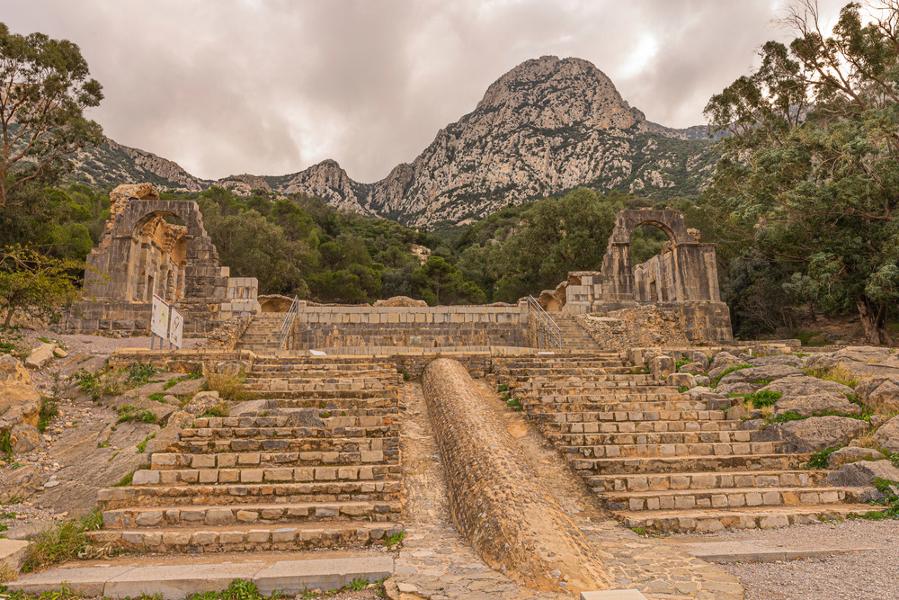
The second-highest peak in Tunisie, Djebel Zaghouan is an imposing mountain that should appeal to hiking lovers. The massif extends nine kilometers long, three kilometers wide, and offers hikers a circuit through pristine wild nature. This itinerary is quite challenging, approximately 7 hours of walking, so it's better suited for experienced hikers. The trail begins at the Berber village of Sidi Medien and follows a rocky path before reaching the summit. The pass is situated between two steep peaks and offers a majestic panorama over the Zriba plain and the Bent Saïdane, Fkirine, and Bargou massifs. Several variants exist to reach the summit. As with most hiking itineraries in Tunisie, we recommend hiring a local guide as trails are unmarked.
Hiking from Douiret to Chenini
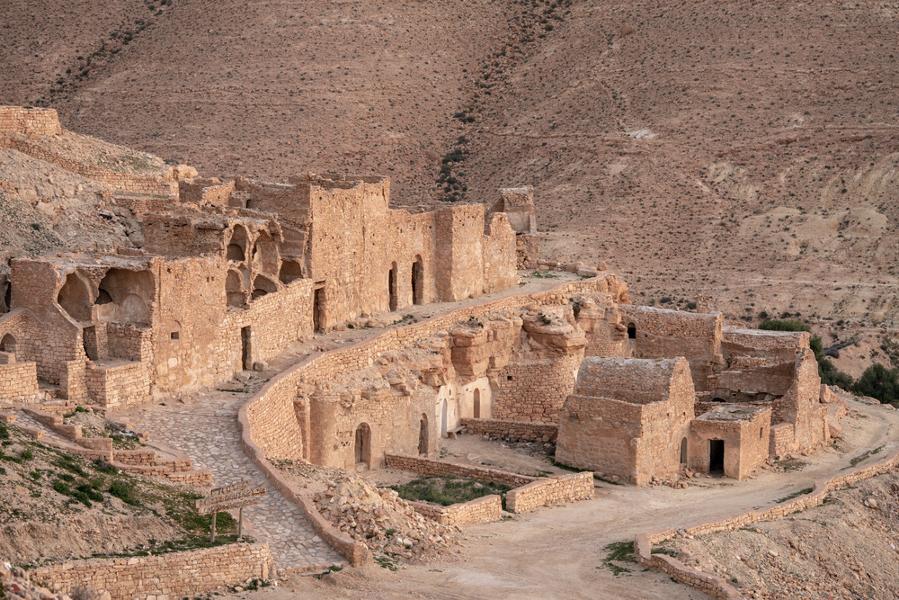
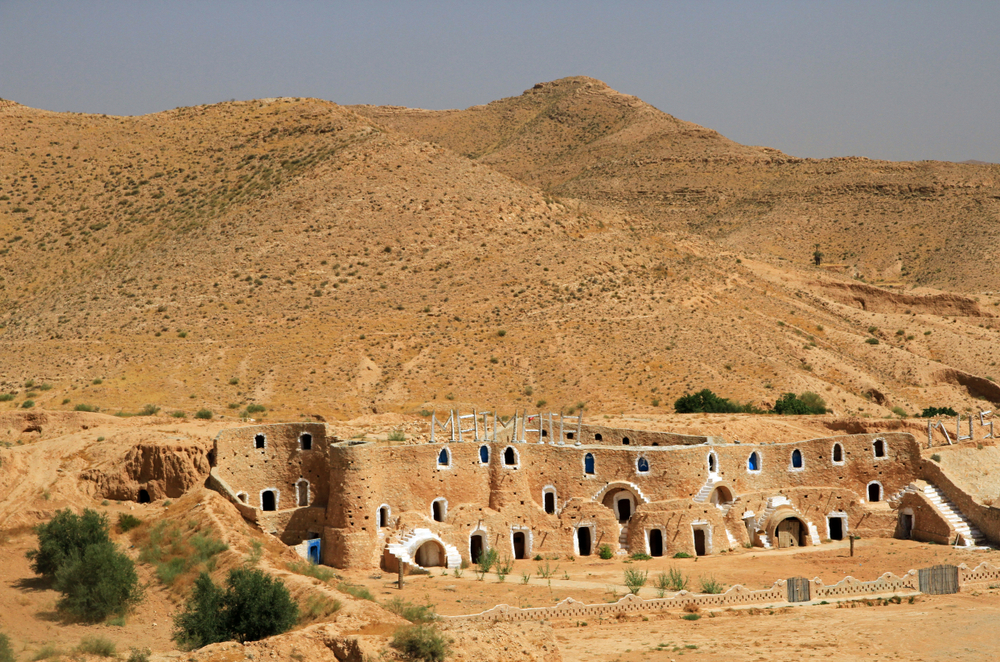
Located in the southeast of Tunisie, the Berber village of Douiret is among the must-see places to visit during a trip to Tunisie. It is notably renowned for its magnificent abandoned ancient Berber village, consisting of troglodytic dwellings carved into the rock on a mountainside. A magnificent 4-hour hike departs from Douiret and reaches another jewel of Tunisie: the Berber village of Chenini. This troglodytic site perched on a hilltop is home to numerous ksour, ancient fortified granaries once used to store food reserves and valuable objects of village inhabitants. A site known worldwide by Star Wars fans as the filming location of several scenes from the saga.
Hiking at Cape Serrat
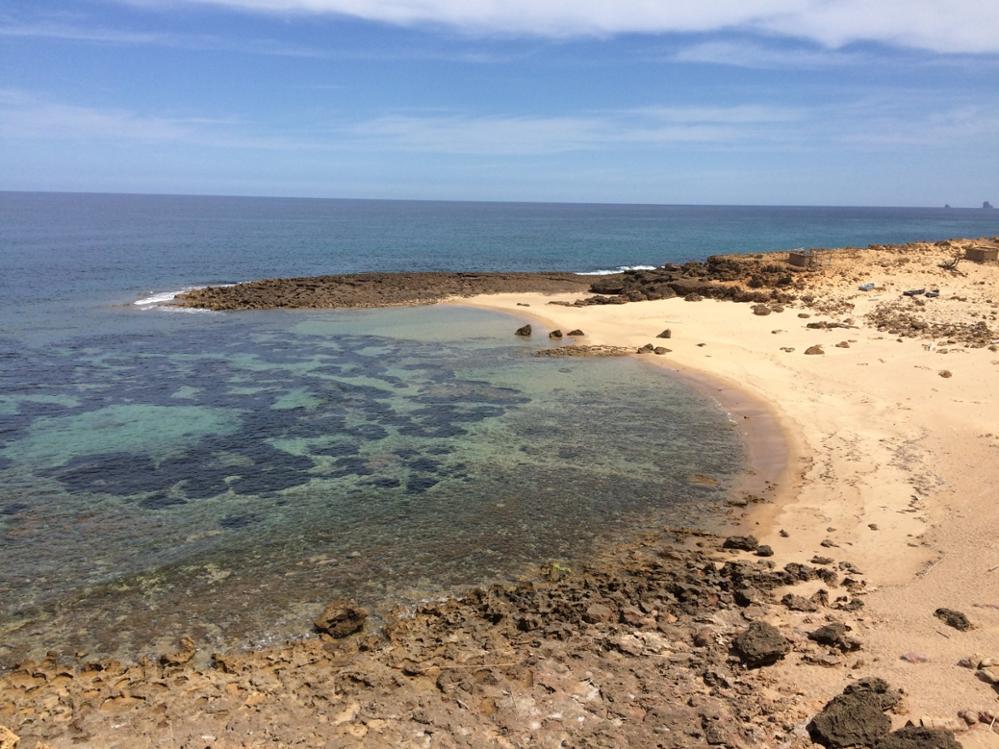
Located in the northwest of Tunisie between the towns of Sejnane and Tabarka, Cape Serrat offers an enchanting natural setting. Facing the Galite archipelago, it's a fairly isolated location, far from major tourist routes. With its coastline bordered by coves, wild sandy beaches, and dotted with pine forests, it's an ideal spot for hiking.
Hiking at Djebel Sidi Abderrahman
Located north of Tunis, the Djebel Sidi Abderrahman hiking circuit overlooks both shores of the Cap Bon peninsula. This challenging 12-kilometer route crosses maquis dotted with rosemary and lavender before reaching the summit that forms the backbone of the Cape. The trail begins at the village of Sidi Bou Ali and climbs gradually up Djebel Sidi Abderrahman on a winding track. At the summit, you'll discover two magnificent tombs, marabouts dedicated to Sidi Abderrahman, as well as an exceptional panorama over the Bay of Tunis and the Cap Bon coastline.
Hiking at Midès Canyon
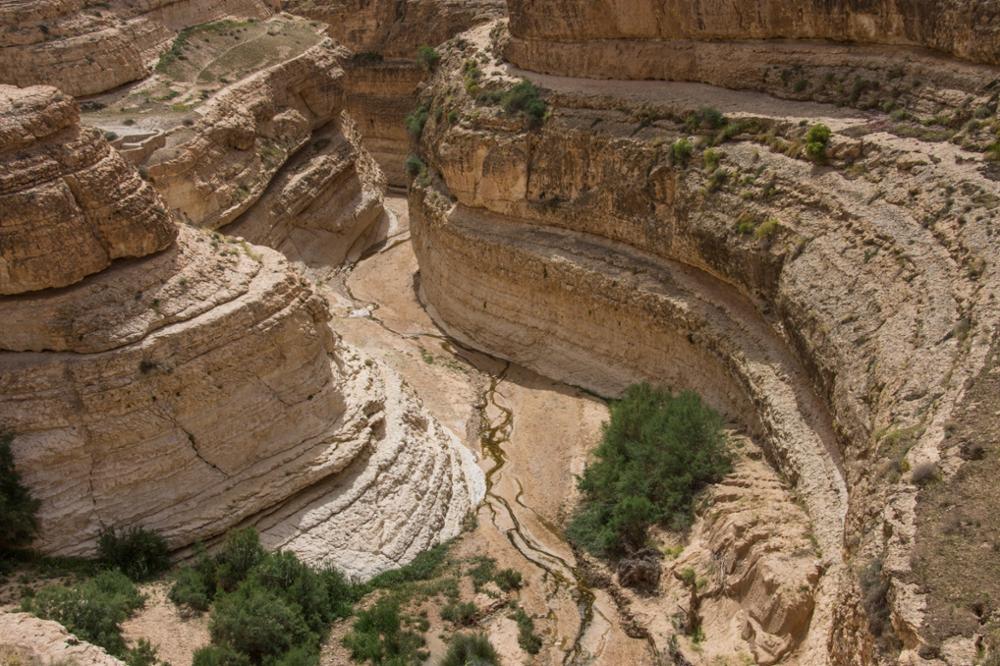
If you plan to visit the Tozeur region, don't miss the sublime Midès Canyon. The Midès oasis is a picturesque village set in a spectacular backdrop, an immense gorge that extends over three kilometers. The oldest part of the village is now in ruins, destroyed by flooding, but a few Berber shops remain. After visiting this ancient hamlet, follow the trail that overlooks the canyon and then descends to the bottom of the gorge. The route crosses spectacular desert landscapes where the rock displays fabulous color contrasts.
Frequently asked questions
The best season for hiking in Tunisie is spring (March to May) and autumn (September to November). Temperatures are pleasant in the mountain massifs of the north, such as Djebel Chambi or Djebel Zaghouan. In summer, the heat is excessive, especially in the south (Tozeur region and Midès Canyon). In winter, the mountains of the north can be cool or even snow-covered.
It is strongly recommended to hire a local guide for most hikes in Tunisie. Trails are very poorly marked or not marked at all, particularly on Djebel Zaghouan or in the Douiret and Chenini region. A local guide knows the itineraries, weather conditions, and can show you hidden points of interest. They also contribute to the local economy.
The hike up Djebel Chambi is one of the most accessible: a drivable track allows you to start at 1,300 meters elevation and only 2 hours of walking are needed to reach the summit (1,544 m). The hike from Douiret to Chenini (4 hours) is also suitable for hikers with moderate experience. The Djebel Zaghouan (7 hours), on the other hand, is reserved for experienced trekkers.
Yes! The hike at Midès Canyon in the Tozeur region offers an unforgettable experience through spectacular desert landscapes. The Midès oasis is surrounded by an immense gorge over 3 kilometers long. It's important to bring plenty of water, a hat, and sunscreen, and to avoid hiking during peak summer due to extreme temperatures.
Yes, Midès Canyon is located approximately 25 kilometers from Tozeur in western Tunisie, near the Algerian border. It is easily accessible by car or through an organized excursion from Tozeur. The site is often combined with a visit to Chebika and Tameghza for a full day of discovering mountain oases.