Tamerza Oasis
Tamerza Oasis
Located 50 km from Tozeur, Tamerza oasis combines palm groves, waterfalls, a canyon and the ruins of a village abandoned after the 1969 floods.
Tamerza, also spelled Tameghza, is situated 50 km north of Tozeur, near the Algerian border. Known by the Roman name Ad Turres, it ranks among Tunisia's most expansive mountain oases and combines palm groves, waterfalls, a canyon and remnants of a village abandoned after the 1969 floods.
Why visit Tamerza Oasis
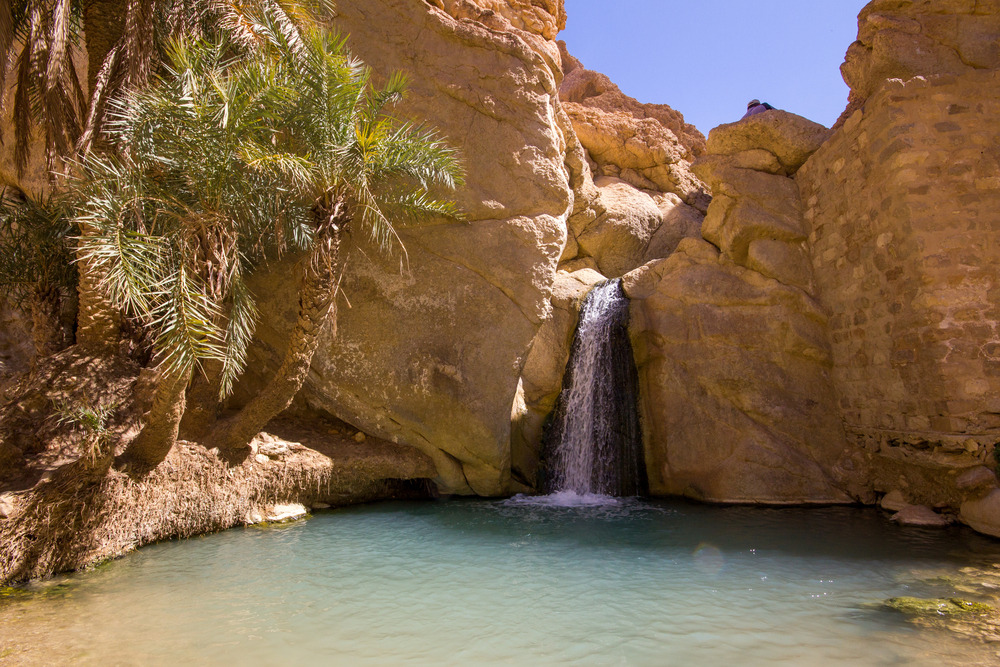
Tamerza brings together in one location several landscapes characteristic of southwestern Tunisia: a palm grove irrigated year-round by a wadi, waterfalls fed by mountain springs, a canyon of pale rock and the ruins of an ancient town. The site offers striking contrast between the verdant oasis and the stark mineral landscape surrounding it. It will particularly appeal to travelers interested in history (Roman occupation, the memory of the 1969 floods), hiking (trails linking Tamerza, Chebika and Midès) and cinema: several scenes from the film The English Patient were filmed here.
History
The site has been occupied since antiquity. The Romans established a garrison here called Ad Turres, an outpost on the southern frontier of the empire. The oasis long served as a strategic water point for caravans crossing the Djérid.
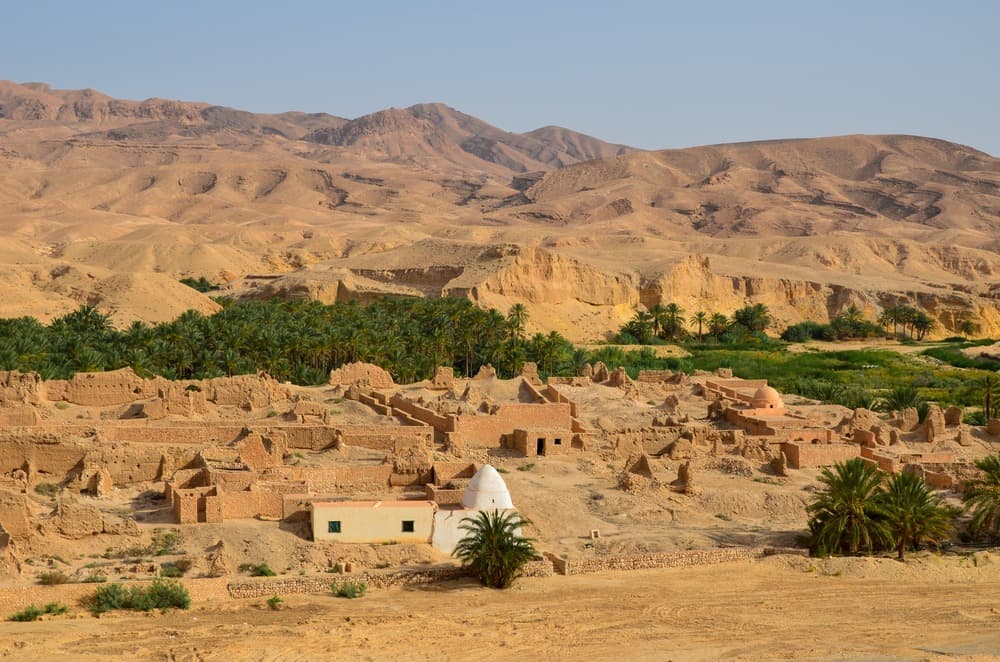
The old village stood on the edge of the wadi, overlooking the canyon. It was abandoned in 1969, following torrential rains of exceptional intensity that triggered deadly floods throughout the Djérid region. The dwellings built from raw clay brick, weakened by the waters, were never rebuilt: inhabitants were relocated higher up, where the fortified village now stands at approximately 600 m altitude. The ruins of the old town remain visible and can be explored.
What to see
The abandoned old village
The alleyways and collapsed walls of the former village form the heart of the visit. The site can be explored freely on foot. From the heights, views sweep down across the palm grove and wadi below.
The waterfalls
Mountain springs form several falls before joining the watercourse that irrigates the palm grove. The area known as Challal Kebir (the great waterfall) is the most visited; it occasionally hosts cultural events, including the Mountain Oases Festival.
The palm grove and canyon
The palm grove can be crossed on foot via shaded paths. It is bordered by a canyon with pale walls, which can be explored by following the wadi. In March, the flowering makes the contrast between verdure and rock particularly striking.
The current village
Built higher up after 1969, the fortified village has a few shops for visitors and the Tamerza Palace, the area's leading hotel, positioned overlooking the canyon.
When to go
The most pleasant period runs from October to April, when daytime temperatures remain manageable. March is particularly worthwhile for the palm grove's flowering. Summer (June to September) should be avoided: temperatures in this part of the Djérid frequently exceed 40°C, and exposed trails become difficult to navigate during the heat of the day. Prefer early morning or late afternoon for optimal light on the canyon.
Practical information
- Duration of visit: allow 2 to 3 hours for the old village and waterfalls, a half-day if you extend into the canyon.
- Difficulty level: easy to moderate walking; closed footwear recommended due to rocky sections.
- Entrance fee: modest admission for the waterfall site.
- What to bring: water, hat, sun protection, some local currency for guides and shops.
- Accommodation: Tamerza Palace allows you to stay on-site; alternatively, use Tozeur as your base.
How to get there
Tamerza is reached from Tozeur, roughly 50 km to the south, via a paved road passing through Chebika. Allow approximately 1 hour by car. The region is typically explored on a circuit combining Chebika, Tamerza and Midès over a single day, either in a private vehicle or with a driver-guide from Tozeur. Rommel's Track, which connects to Metlaoui from the west, extends the itinerary for travelers equipped with a 4x4.
Nearby attractions
- Chebika Oasis: nestled in a steep gorge, it houses a mausoleum and the ruins of an ancient mountain village. From Chebika, Tamerza is reached by road in around fifteen minutes by car, or in 1.5 hours on foot via a mountain trail.
- Midès Oasis: the most remote of the three mountain oases, dominated by ruins of an ancient fortress perched above a spectacular canyon. The trail alongside the wadi allows passage from one valley to the other through narrow gorges.
- Tozeur: gateway to the region, featuring a medina built from clay brick and an extensive palm grove.
Frequently asked questions
Frequently asked questions
Allow 2 to 3 hours for the old village and waterfalls. If you combine Tamerza with Chebika and Midès from Tozeur, plan for a full day.
The old village was abandoned in 1969 after torrential rains that caused devastating floods throughout the Djérid region. Inhabitants were relocated to higher ground, where the fortified village now stands.
Yes, a mountain trail connects the two oases; allow approximately 1.5 hours of walking. The journey can also be made by car in around fifteen minutes via the road.
October to April, when temperatures are moderate. March is particularly recommended for the palm grove's flowering. Summer should be avoided due to the heat.
Yes, several scenes from the film The English Patient were shot in the mountain oases region, including Tamerza and Midès.
Include Tamerza in your journey
Tamerza fits naturally into an itinerary through southwestern Tunisia combining mountain oases, desert and Berber villages. To build a custom tour, explore our Tunisia travel experiences.
Interested in this visit?
We can include it in your personalised itinerary.