Douz Market
Douz Market
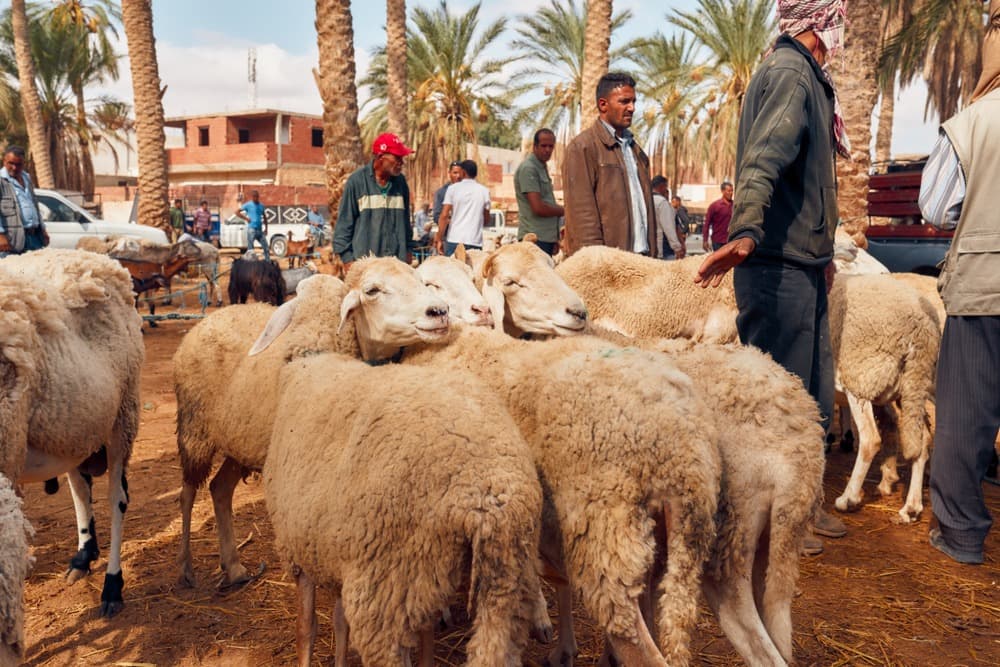
Every Thursday morning in Douz, shepherds from the Grand Erg oriental gather around an ever-active livestock market, far from conventional tourist circuits.
Every Thursday morning, herders from the Grand Erg oriental converge on Douz, in southern Tunisie, for the livestock market. Camels, horses, poultry: Douz market remains an authentic gathering place for livestock trading, where nomads and settled communities meet far from mainstream tourist circuits.
Why visit Douz market
Douz market is not a reconstructed folk market staged for visitors. It is a genuine place of transactions where herders come to buy, sell and trade their livestock. The market is primarily frequented by men, and tourists remain few in number, making it a rare vantage point for observing Saharan pastoral life.
- Active livestock market: camels, horses, poultry, sheep, goats
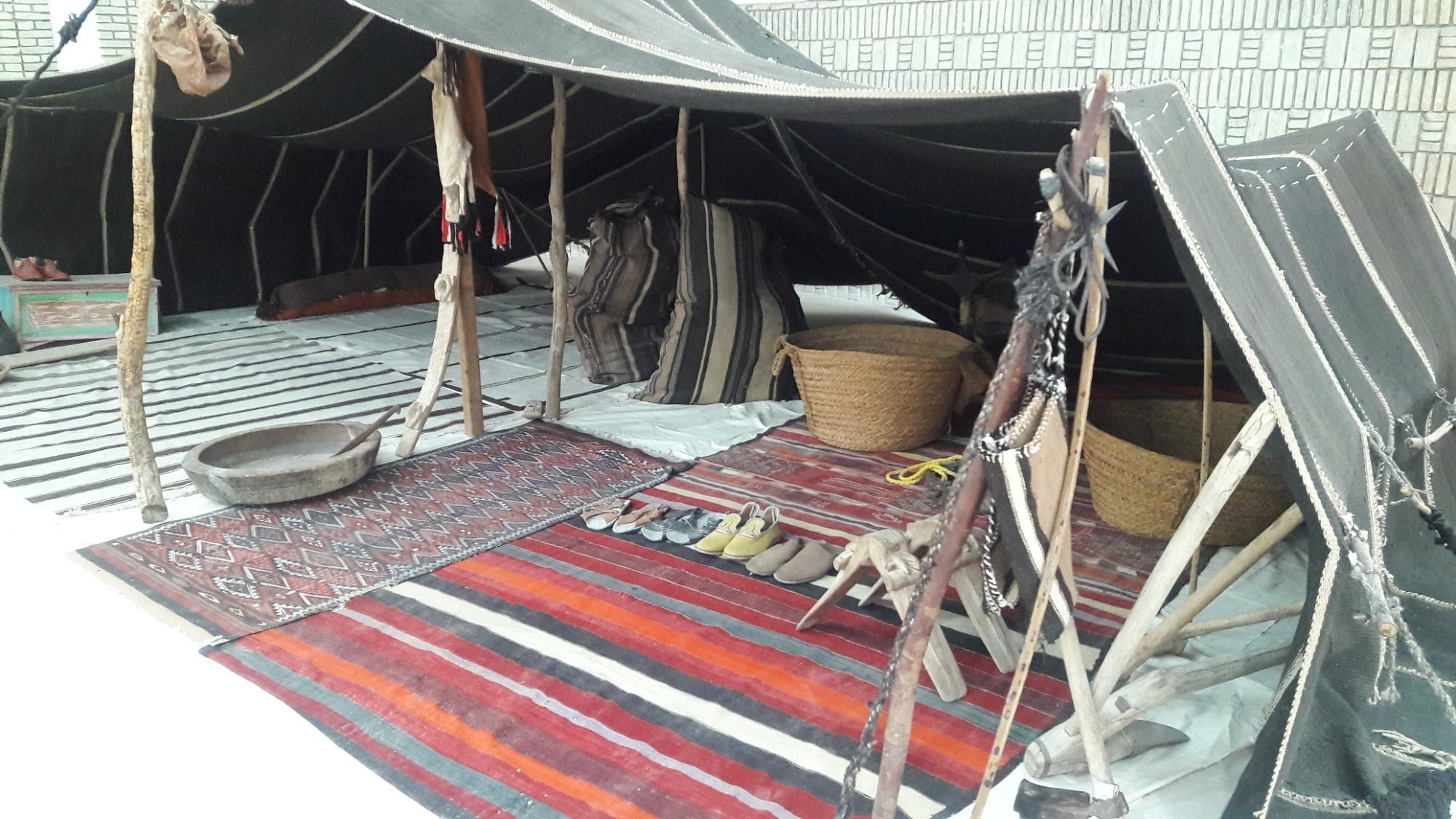
- Stalls of practical goods: hay bales, crockery, fabrics, jewellery, vegetables, cereals, spices, Bedouin tents
- Atmosphere of traditional negotiation, little staged
- Opportunity to exchange with herders and, depending on circumstances, to join an organized camel trek arranged locally
History of the market
Douz was once a major gathering oasis for the Merazigues, a nomadic people of Arab origin who entered Tunisie in the 13th century. Over generations, a small town grew up around the oasis and the locality became established as a caravan crossroads between the Sahara and northern Tunisie.
This caravan past directly accounts for the market's current function: a livestock market where desert herds meet the needs of settled villages. The nomads who still gather there today continue a still-living commercial tradition, even though the surrounding way of life has evolved considerably.
What you will see on-site
Livestock transactions
Herders arrive at dawn to set up their pitches. Animals are lined up and tethered in precise order, each breeder touting the qualities of their stock. Before any haggling, the buyer conducts a careful inspection of the animal's teeth and back. Negotiations are vigorous, sometimes heated, but generally end with a handshake.
A telling detail of pastoral logistics: some herders have fitted beds of wood shavings in their trucks to transport and keep livestock in good condition.
The concession stand
A small central stand oversees sales: receipts are drawn up, transactions are recorded and disputes between herders are settled. It is also the corner where you can grab a sandwich or drink tea between transactions.
The general market
Beyond the animals, the souk supplies all everyday needs: hay bales, crockery, fabrics, jewellery, vegetables, cereals, spices and Bedouin tents. For herders coming from afar, the market also serves as a social outing: people catch up on news from neighbouring villages, compare their herds.
Practical information
- Key day: Thursday morning, the height of the market. On other days, activity is greatly reduced.
- Photography: generally tolerated, but seek visual agreement before photographing people, particularly herders in the middle of transactions.
- Dress: covering clothes and closed-toe shoes, the ground is dusty and the environment remains a livestock market.
- Circulation permit required if you plan a 4x4 raid in the Grand Erg oriental departing from Douz.
When to come
The height of the market is Thursday morning, from sunrise until late morning. Season-wise, the most comfortable period extends from autumn to early spring (October to April), when daytime temperatures remain bearable. The Saharan summer is trying and market activity is often reduced to the very first hours.
How to get there
Douz can be reached by road from the main airports in southern Tunisie: Tozeur airport is approximately 125 km away, Djerba airport approximately 260 km away. Car rental or private transfer remain the simplest options; connections by public transport exist but take more time.
Nearby
- Douz Sahara Museum: an ideal ethnographic complement to place the market in its nomadic context.
- Chenini: troglodytic Berber village, another facet of southern Tunisie.
- Guermassa: perched ksar representative of defensive architecture in the South.
- The Chott el-Jerid and the Tozeur oasis, accessible on the same circuit.
Frequently asked questions
Frequently asked questions
Thursday morning is the only time when the livestock market operates at full capacity. On other days, you will see only residual activity.
Yes, photographing the herds and the general atmosphere is permitted. However, always seek agreement, even non-verbally, before framing a person, especially herders in the midst of negotiation.
The most practical entry points are Tozeur airport (approximately 125 km away) and Djerba airport (approximately 260 km away). The final journey is by car, and a 4x4 is needed if you extend the experience with a raid in the Grand Erg oriental.
Preparing your trip
Douz market fits naturally into a southern Tunisie circuit combining oases, Berber ksars and Saharan expanses. To build a tailor-made itinerary including Douz and the Grand Erg oriental, consult our trips in Tunisie.
Interested in this visit?
We can include it in your personalised itinerary.