Guermassa
Guermassa
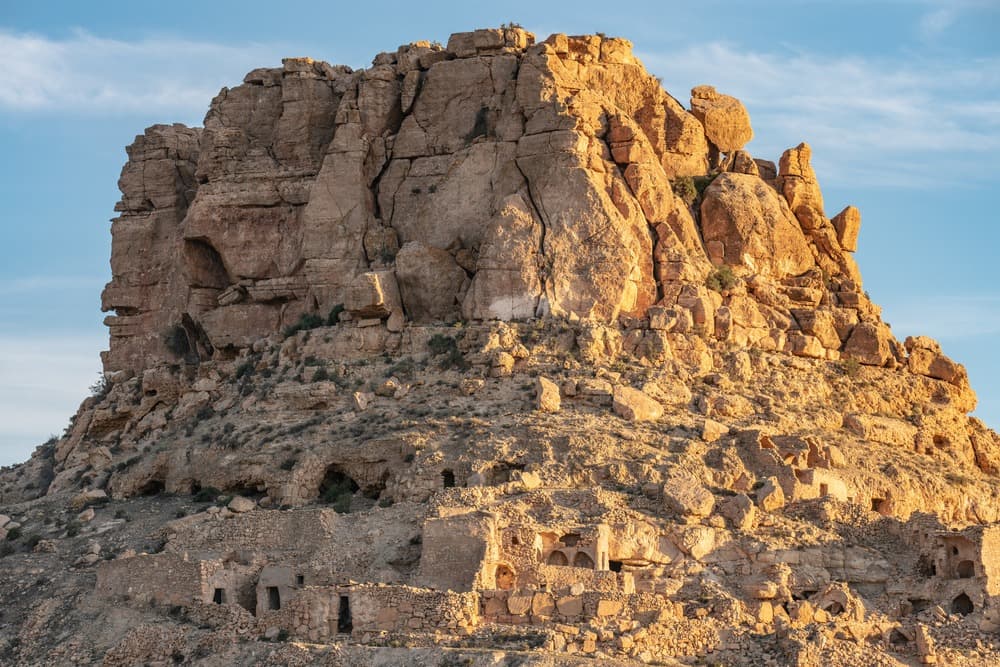
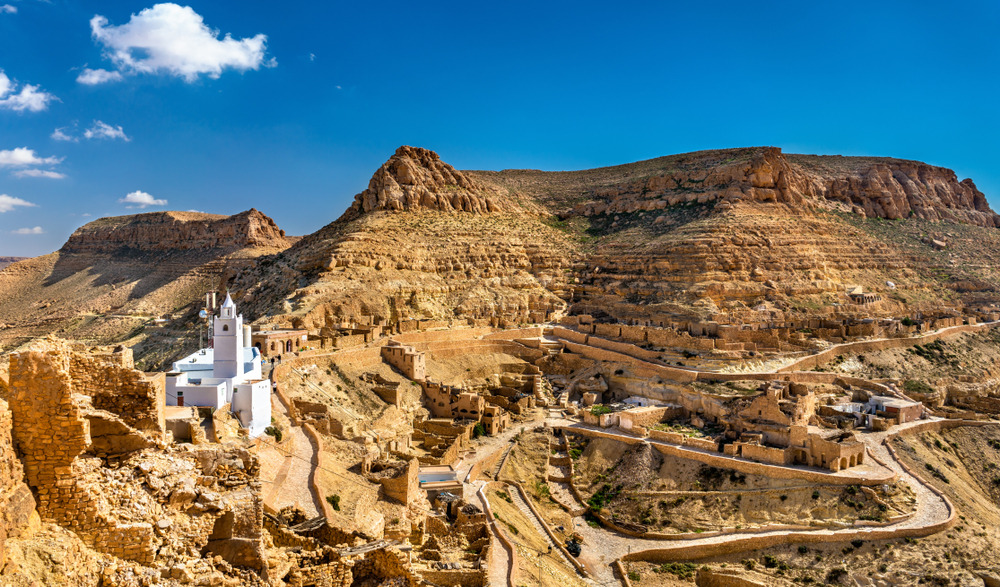
A former fortified Berber village in the Dahar, Guermassa combines a 12th-century ksar, troglodytic dwellings and a 1940s mosque, some thirty kilometers from Tataouine.
Perched on a rocky outcrop in the Dahar region of southeastern Tunisie, Guermassa is an ancient fortified Berber village largely abandoned since the 1970s. Terraced granaries, narrow streets and cave dwellings form an almost deserted ksar, roughly thirty kilometers from Tataouine.
Why visit Guermassa
Guermassa illustrates a Berber way of life that has almost disappeared from the Dahar. Unlike the busier Chenini, the site remains off the beaten track: only a handful of families still live here. The visit combines defensive architecture, cave-dwelling habitat and expansive views across the arid plateaus.
- A fortified 12th-century ksar largely preserved in its original form
- A village mosque built in the 1940s
- A silent atmosphere, untouched by tourist amenities
- Panoramic views over the Dahar's tabular reliefs
History of the village
Guermassa was founded in the 12th century and fortified against tribal raids that swept through the Dahar at the time. Like other Berber villages in the region, it combines a ksar — a complex of tiered fortified granaries — built above a cave-dwelling settlement carved into the hillside. Inhabitants stored grain, oil and provisions here, safe from plunder.
The village mosque dates from the 1940s. It was constructed from rubble and then covered in plaster, in a sober style typical of other rural mosques in southern Tunisie.
Abandonment in the 1970s
After Tunisie's independence, President Bourguiba visited the region as part of his modernization plan and convinced inhabitants to leave the cave dwellings for newly developed towns on the plains. During the 1970s, Dahar Berbers gradually abandoned their homes to settle around Tataouine. Many also emigrated to France, which was recruiting foreign workers at the time. Only a few families remained in Guermassa.
What to see
The ksar and cave-dwelling settlement
The fortified complex includes dwellings, the mosque, a former oil mill, small squares, courtyards and a network of narrow alleyways. As you explore the site, look for old palm-wood doors, oil jars, amphorae, wall engravings and palm-wood ceilings in some rooms not carved directly from the rock.
Surrounding remains
The Tataouine region is rich in Neolithic and proto-historic remains, as well as Punic and Roman ruins. Several minor sites are scattered through neighboring valleys and can extend a Guermassa visit for those traveling with their own vehicle.
Berber craftsmanship: the magroum
Dahar communities still maintain some traditional crafts. Magroum embroidery is created using the ancestral "Raague" technique, which involves manually working leather with hand-cut threads. Magroum once adorned women's trousseaux (kohl vials) and men's accessories: sword belts, horse saddles, water carriers. Traditional Raague is now disappearing, as composite materials gradually replace leather threads that have become scarce on local markets.
Practical information
- Visit duration: allow 1 to 2 hours to explore the ksar and cave-dwelling quarter
- Access: personal vehicle or taxi from Tataouine essential, no public transport
- Fee: free entry, no ticket office
- Services: no shops on site, bring water and snacks, especially if visiting with family
- Equipment: closed-toe shoes (rocky ground), hat, sun protection
When to visit
Guermassa sits in a desert climate (BWh according to the Köppen-Geiger classification). Rainfall is scarce (around 115 mm annually) and average annual temperature is about 20 °C, with significant day-night variations.
- October to April: most comfortable period, mild days and low-angle light in late afternoon
- May and September: still manageable but hot mid-day
- June to August: high temperatures, visits discouraged outside early morning
Opt for morning or late afternoon: the light enhances the stone façades and ochre landscape colors.
How to get there
Guermassa is reached only by local roads and tracks from Tataouine or Ghomrassen. Four routes are possible:
- From regional road 207 (Tataouine–Ghomrassen axis): local turnoff of roughly 20 km to the village
- From el Ferch: alternative route about ten kilometers long
- From Ghomrassen via K'hil: approximately 11 km of local road
- Track connecting Tataouine, Guermassa and Chenini: 5.5 km, more challenging but practical for visiting both ksars
A standard car is sufficient on paved roads; a 4x4 is preferable for tracks, especially after rain.
Nearby attractions
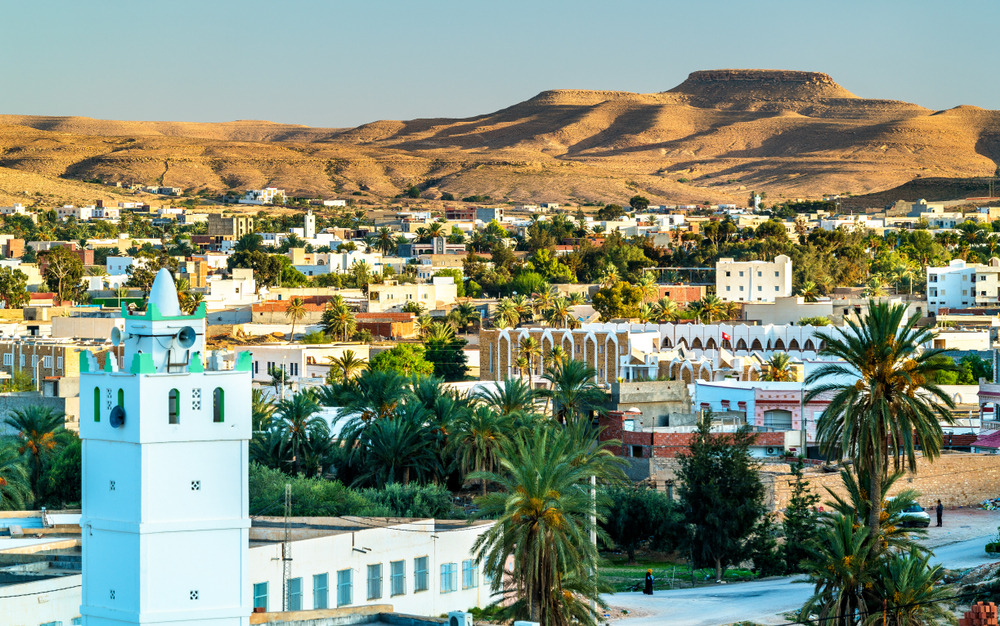
- Chenini: neighboring Berber ksar, better known and still partially inhabited
- Tataouine: hub for Dahar ksars, market on Monday and Thursday
- Chebika oasis: mountain oasis in southwestern Tunisie
- Bulla Regia: Roman site in the northwest, historical complement
Frequently asked questions
Frequently asked questions
Include Guermassa in your trip
Guermassa naturally fits into a circuit through southern Tunisie combining Berber ksars, mountain oases and Roman heritage. To build a custom itinerary including the Dahar, explore our Tunisie travel suggestions.
Nearby
Interested in this visit?
We can include it in your personalised itinerary.