Ghomrassen
Ghomrassen, in the Tataouine governorate, is a Berber village in southern Tunisie known for its stone ghorfas and troglodytic dwellings carved into the rock.
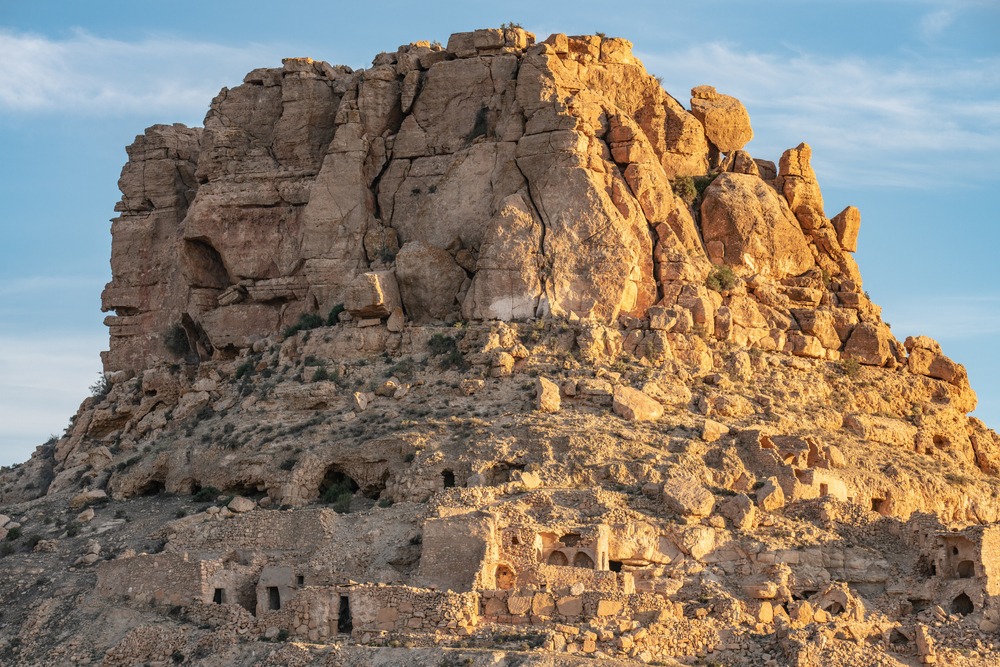
Ghomrassen is a small town in the Tataouine governorate, in the far south of Tunisie. Perched on a rocky plateau, it is known for its fortified Berber granaries (ghorfas) and troglodytic houses carved into the rock. This Berber territory preserves rare vernacular architecture, a testament to a way of life adapted to the constraints of the desert.
What to see
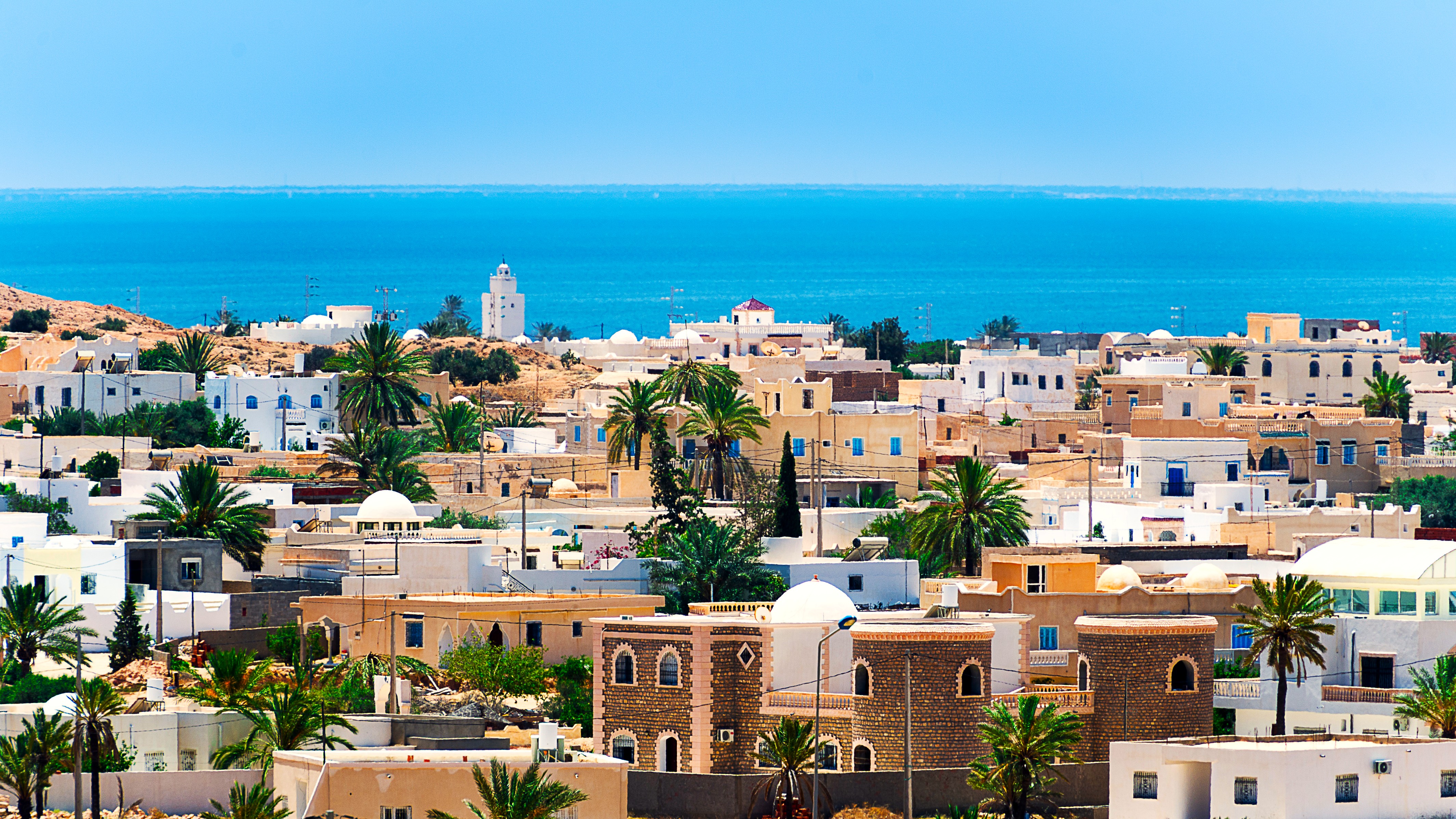
The urban landscape of Ghomrassen blends modern construction with remnants of traditional housing. The ghorfas — stacked stone storage cells on multiple levels — still structure certain neighborhoods. Troglodytic dwellings carved into the cliff face offer concrete insight into Berber climate ingenuity: cool in summer, protected from wind in winter.
History and context
Ghomrassen takes its name from the Berber tribe of the Ghomrassen, who inhabited this region before Islamization. The town developed around terraced agriculture and caravan trade. Like Tataouine and Ksar Ouled Soltane, it belongs to the zone of ksour — these fortified villages of southern Tunisie classified among the most distinctive architectural heritage sites of the Maghreb.
Highlights of a visit
The ghorfas of the old quarter
Collective limestone granaries, sometimes spanning two or three stories, are the architectural symbol of the region. Some remain partially in use or have been repurposed. Their honeycomb façade, pierced with dark wooden doors, is characteristic of ksar style.
The panorama over the plain
From the heights of Ghomrassen, the view extends across an arid plain striped with dry wadi channels. Late afternoon light accentuates the contrasts between ochre rock and sky. This viewpoint is accessible on foot from the center.
Photography tips
Golden light at day's end reveals the texture of stone and the shadows cast by ghorfas. Favor the narrow alleyways of the old quarter for depth-rich framing. Ask residents' permission before photographing private courtyards or people.
Location and access
Ghomrassen is located about twenty kilometers northwest of Tataouine. The paved road is passable by ordinary car. Louages (shared taxis) regularly connect Tataouine to Ghomrassen. The town center is accessible on foot once there; some elevated neighborhoods require climbing steep alleyways.
Nearby attractions
- Ksar Ouled Soltane — one of the best-preserved ksour in southern Tunisie, a few kilometers south of Tataouine.
- Tataouine — governorate capital, logical starting point for exploring the ksour region.
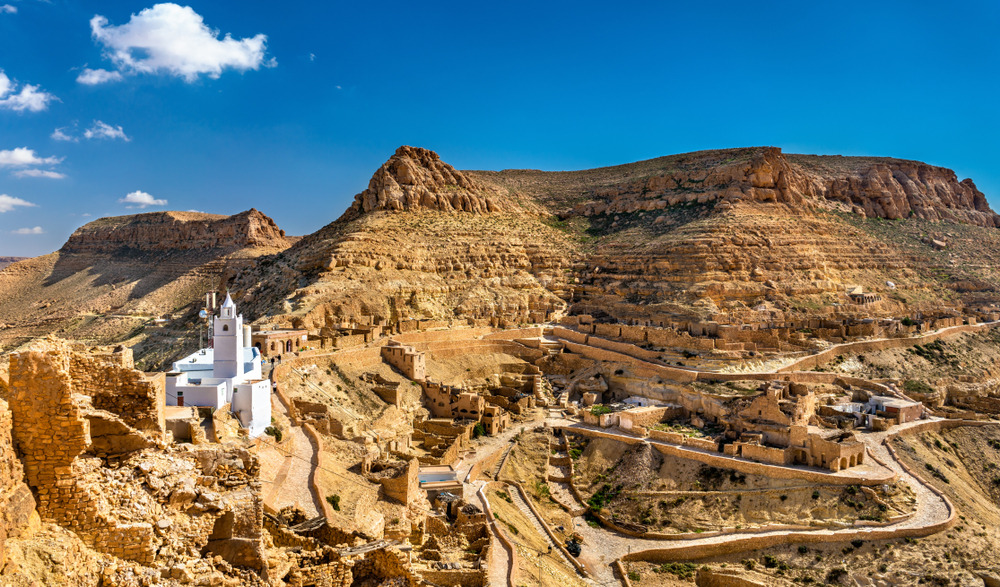
- Chenini — perched troglodytic Berber village, among the most photographed in southern Tunisie.
- Douiret — partially abandoned village, with white mosque and ruined granaries, timeless atmosphere.
Frequently asked questions
Spring (March-April) and autumn (October-November) offer pleasant temperatures. Summer is very hot in southern Tunisie; if you visit in July-August, plan your visit for early morning.
Independent visiting is possible. A local guide allows access to private troglodytic houses and provides insight into the region's Berber tribal history.
Yes. From Tataouine, a driving circuit allows you to visit Ghomrassen, Chenini, and Ksar Ouled Soltane in the same day, provided you start early.
No strict rules for visiting the village. Modest clothing is recommended out of respect for residents, especially in residential neighborhoods.
Louages regularly depart Tataouine toward Ghomrassen. A rental car remains the most flexible option for visiting multiple sites in the region.
Interested in this visit?
We can include it in your personalised itinerary.