Chebika Oasis
Chebika Oasis
Located 50 km from Tozeur, the mountain oasis of Chebika combines a palm grove, gorges, a waterfall and the ruins of a Berber village abandoned after the 1969 floods.
Perched on the slopes of the Djebel el Negueb mountains, roughly 50 km northwest of Tozeur, the Chebika Oasis is one of three mountain oases in southwestern Tunisie, alongside Tamerza and Midès. Its natural springs, narrow gorges and the ruins of its ancient Berber village make it a singular site in the Jerid region, just a few kilometres from the Algerian border.
Why visit Chebika Oasis
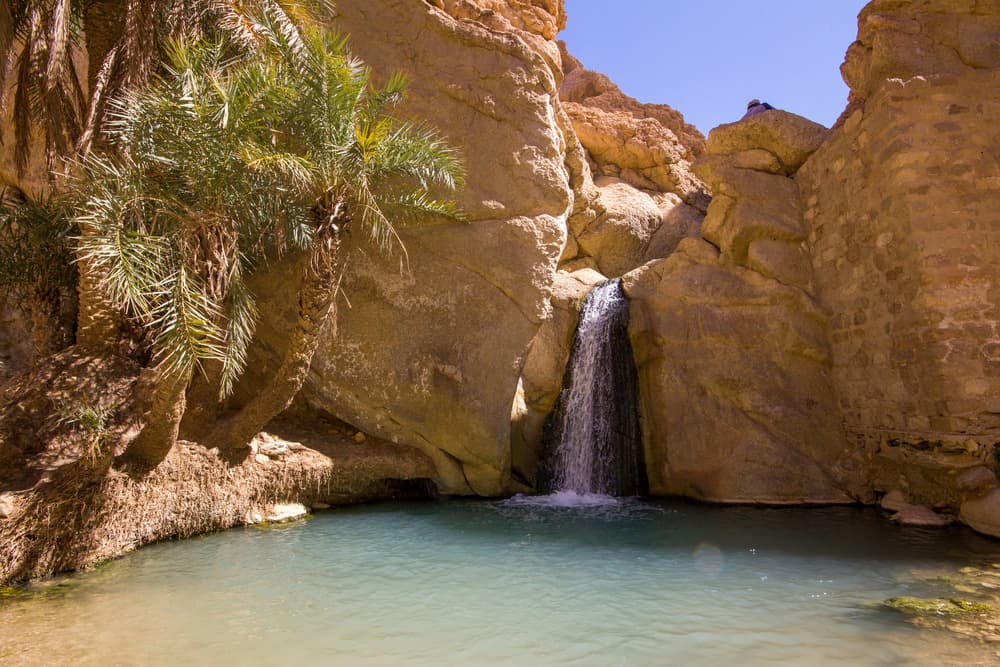
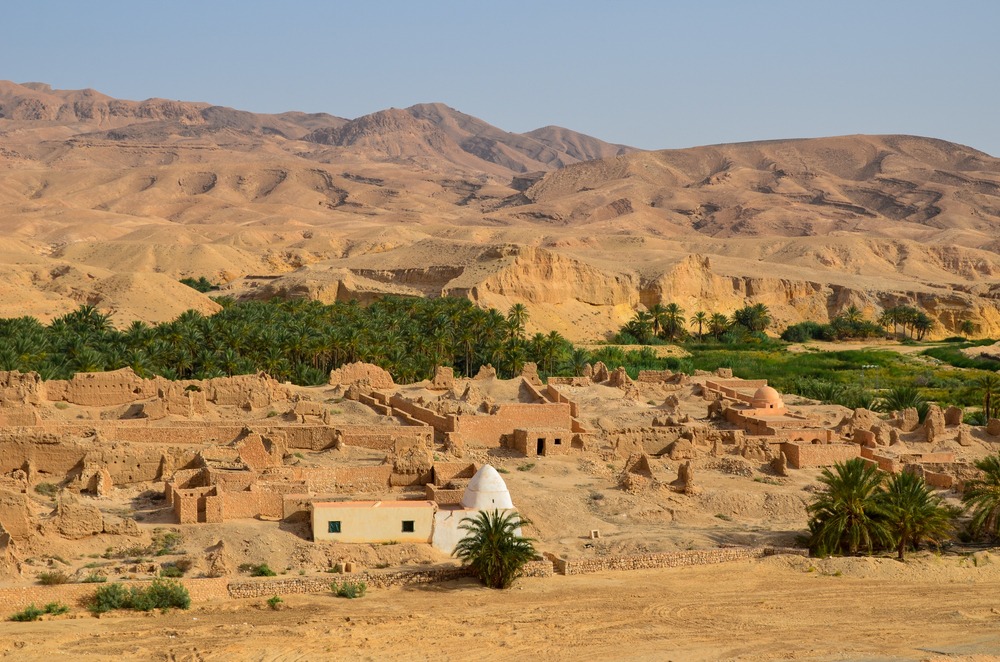
Chebika brings together several contrasting landscapes within a compact area: an irrigated palm grove fed by natural springs, gorges carved into rock, a waterfall below and the remnants of the old village abandoned after the 1969 floods. The contrast between orange gypsum rocks, ochre sand and the dense green of the palm grove creates a photogenic setting recognised by cinema: the region served as a backdrop for several productions, including Star Wars: A New Hope (filmed nearby, in Tozeur) and The English Patient.
A visit here naturally pairs with nearby oases of Tamerza and Midès, allowing you to complete a coherent circuit through the mountainous Jerid in a single day.
Site history
Chebika has occupied a strategic location since antiquity. The Romans established a surveillance post here named Ad Speculum ("the mirror"), an allusion to the light signals exchanged between frontier posts of the Saharan border. The Berber village that succeeded it developed high on the rocky slope, benefiting both from natural defence and proximity to the springs.
In 1969, torrential rains and exceptional floods severely damaged the stone and mud-brick homes. Residents then relocated to lower ground in modern breeze-block constructions. The ruins of old Chebika remain on the slope and form the heart of the visit today.
What to see on site
- The ruined old village: stone and mud houses clinging to the slope, overlooking the palm grove. A marked trail allows you to explore it.
- The gorges: a narrow passage carved between rocky walls leads to the main spring. The passage is sometimes tight—wear sturdy shoes.
- The waterfall and pool: at the end of the gorges, water gushes from a fissure and forms a small pool where bathing is occasionally possible depending on the flow.
- The viewpoint over the palm grove: from the top of the trail, a panorama of the sea of palms, the new village and the Negueb mountains.
- The marabout: a small white religious building located on the heights, anchoring the spiritual dimension of the place.
Practical information
Allow 1.5 to 2.5 hours to tour the site at a leisurely pace, longer if you venture into the gorges. A modest entry fee is usually charged on arrival. Local guides offer their services at the entrance: useful for understanding the history of the old village and the ancestral water management, but not essential for the main route, which is marked.
Bring closed-toe shoes (the trail is rocky), a hat, sunglasses and a sufficient water supply. Facilities on site are limited to a few souvenir and refreshment stalls.
When to go
The best period runs from October to April, when daytime temperatures remain manageable. From June to September, temperatures frequently exceed 40 °C midday and make hiking through the gorges strenuous; if you travel in summer, prioritise very early morning or late afternoon. Light is particularly striking in the late afternoon, when rocks take on a copper hue.
How to get there
Chebika is reached from Tozeur via the regional road serving el-Hamma, then turning towards the mountain oases. The journey takes about 1 hour by car. The road is paved all the way to the site; a standard vehicle is sufficient, though a 4x4 is only necessary if you venture onto secondary tracks. Most visitors incorporate Chebika into a day circuit combining Tamerza (waterfalls and gorges) and Midès (spectacular canyon), each less than 30 minutes apart.
Nearby
- Tamerza (Tamaghza): the largest of the three mountain oases, famous for its waterfalls and its old village, also abandoned after the 1969 floods.
- Midès: overlooks a vertiginous canyon on the Algerian border; remarkable views from the edge of the plateau.
- Tozeur and its historic palm grove, the region's logistical hub.
- Douz Sahara Museum, roughly 2 hours away, to deepen your discovery of southern Tunisie.
- Berber villages in the southeast such as Chenini or Guermassa, as part of a broader circuit.
Plan your journey
Chebika Oasis fits naturally into an itinerary combining the Jerid, the Grand Erg oriental and Berber villages in the south. To build a bespoke circuit, explore our trips to Tunisie.
Interested in this visit?
We can include it in your personalised itinerary.