Great Mosque of Kairouan (Mosque of Okba)
Great Mosque of Kairouan (Mosque of Okba)
Founded in 670 by Okba ibn Nafi and enlarged under the Aghlabids, the Great Mosque of Kairouan is one of Africa's oldest Islamic monuments. Its square minaret, ancient columns and 9th-century mihrab make it an exceptional UNESCO World Heritage site.
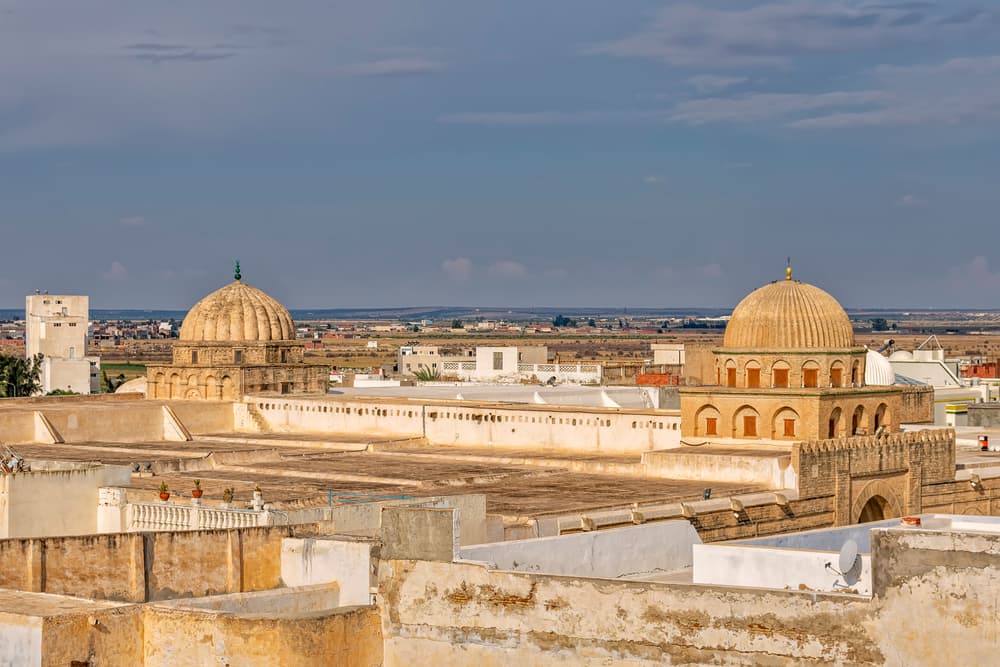
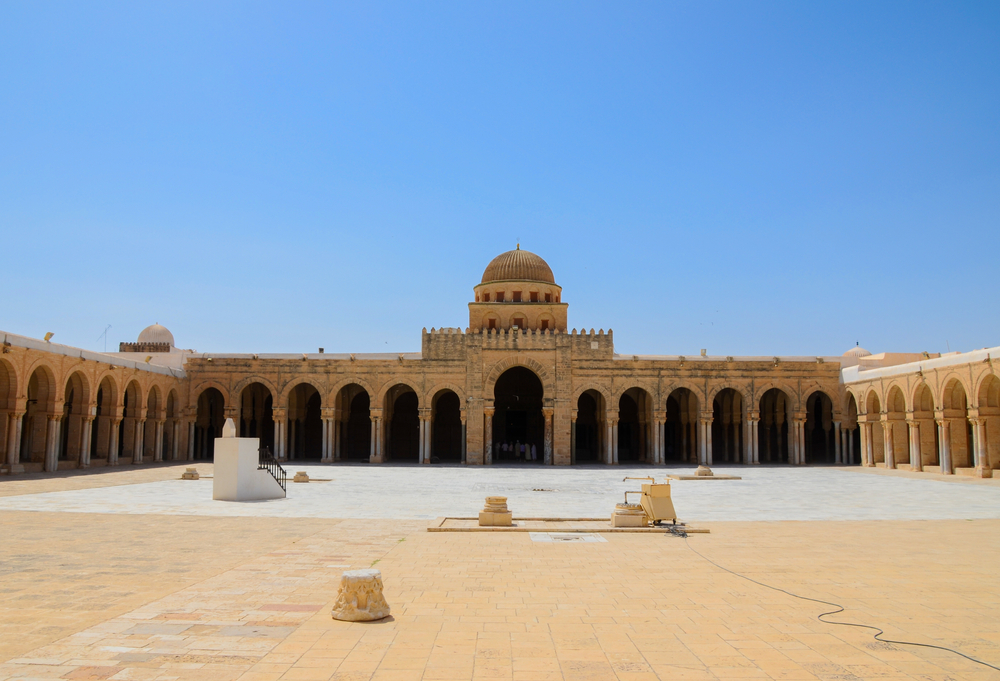
Founded in the 7th century by Okba ibn Nafi, the Great Mosque of Kairouan is one of the oldest religious buildings in the Islamic world. Classified as a UNESCO World Heritage site, it dominates the medina of Kairouan and stands as a major landmark of Islamic architecture in North Africa. Its three-tiered square minaret, recovered ancient columns and arcaded courtyard make it an exceptional testimony to Umayyad and Aghlabid art.
Quick Practical Info
- Access: paid entry for non-Muslims; Muslims enter freely.
- Dress code: shoulders and knees must be covered; robes are provided at the entrance if needed.
- Shoes: must be removed before entering the prayer hall (non-Muslims remain in the courtyard).
- Recommended duration: 45 minutes to 1 hour for the courtyard and exterior tour.
- Closure: closed to non-Muslims during prayer times.
What You'll See
The interior courtyard, paved with marble and limestone, is surrounded by colonnaded arcades, many of whose columns come from Roman and Byzantine sites in the region. The minaret, one of the oldest still-standing in the Islamic world, rises in three diminishing tiers. The hypostyle prayer hall contains over 400 ancient columns and a sculpted marble mihrab from the 9th century, adorned with glazed tiles imported from Baghdad.
History and Context
Okba ibn Nafi founded the mosque in 670 CE, as Kairouan was being established as the base for the Arab conquest of the Maghreb. Rebuilt and enlarged under the Aghlabids in the 9th century, it achieved its current form during this period. Kairouan then became the fourth holy city of Islam and the mosque a center of intellectual and religious influence throughout the Maghreb.
Highlights of Your Visit
The Three-Tiered Minaret
Built around 724–728, this square minaret is considered the oldest preserved minaret in the Islamic world. Each level is slightly narrower than the one below. It serves as a visual landmark visible throughout the medina.
The Courtyard and Its Ancient Columns
The granite, porphyry and marble columns come from Carthage, Sbeitla and other Roman sites. Their deliberate reuse testifies to cultural continuity between Antiquity and early Islam.
The Aghlabid Mihrab
Dating from the 9th century, this mihrab is decorated with sculpted marble panels and metallic luster tiles imported from Iraq. It is considered one of the finest examples of early Islamic decoration.
The Well and Cistern
In the courtyard, a well and cistern collected rainwater via the roof drainage system. This Aghlabid hydraulic system is still visible today.
Etiquette and Visiting Rules
- Non-Muslims cannot enter the prayer hall; visits are limited to the courtyard and arcades.
- Covered dress is mandatory: shoulders, arms and knees must be covered for all visitors.
- Speak softly and avoid loud behavior, especially during prayer times.
- Remove shoes before stepping into the prayer hall threshold if access is granted to you.
- Photography is generally permitted in the courtyard; check restrictions at the entrance.
Photography Tips
Morning light is ideal for photographing the minaret from the courtyard, before the sun gets too high. The arcades create interesting light and shadow play mid-morning. Frame the columns in perspective to emphasize the depth of the hypostyle hall as seen from the courtyard entrance.
Location and Access
The mosque lies in the heart of Kairouan's UNESCO-listed medina. It is accessible on foot from most downtown hotels. Kairouan is connected to Tunis by motorway (approximately 160 km) and regular bus lines. Shared taxis (louages) also serve the city from Sousse and Tunis. The medina is largely pedestrian; wheelchair accessibility to the courtyard is limited by uneven paving.
Nearby Attractions
- Medina of Kairouan — Souks, carpet craftsmanship and traditional architecture just steps away from the mosque.
- Mosque of the Three Doors — Small 9th-century mosque with a remarkable carved façade, in the medina.
- Aghlabid Basins — 9th-century hydraulic reservoirs, testament to Aghlabid engineering, at the northern edge of the medina.
- Mausoleum of Sidi Sahbi — Sanctuary of a Companion of the Prophet, decorated with ceramics and stucco, a few minutes' walk away.
Interested in this visit?
We can include it in your personalised itinerary.