Barber's Mosque (Zaouïa of Sidi Sahbi)
Barber's Mosque (Zaouïa of Sidi Sahbi)
The Barber's Mosque, or Zaouïa of Sidi Sahbi, houses the mausoleum of a Companion of the Prophet in Kairouan's medina. Its courtyards adorned with zellige tiles and carved stucco make it one of Tunisia's most refined decorative spaces.
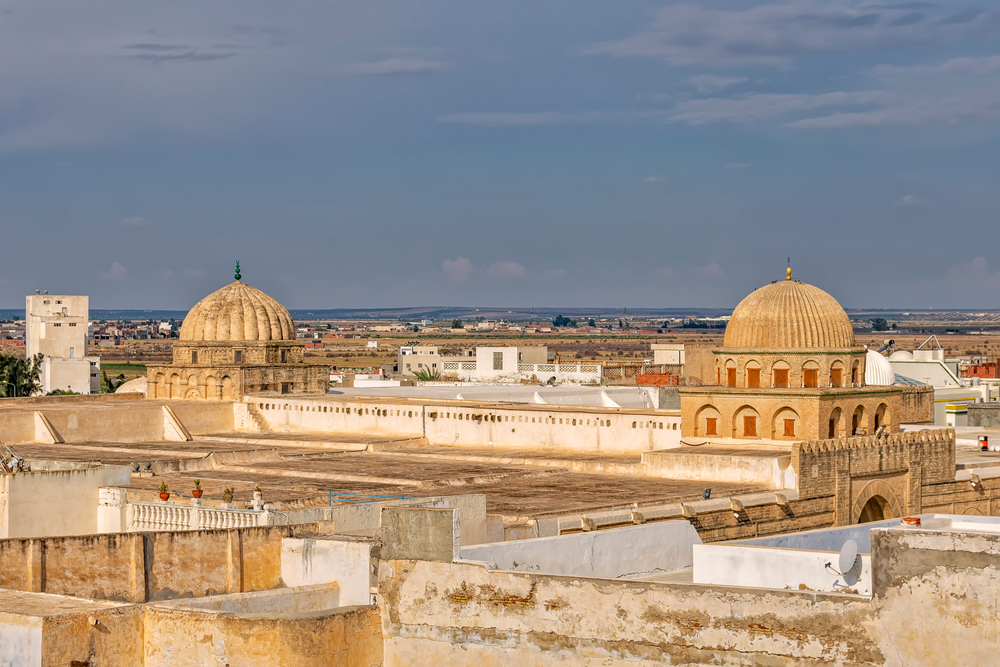
The Barber's Mosque, officially the Zaouïa of Sidi Sahbi, stands in the medina of Kairouan. It houses the mausoleum of Abou Zama el-Belaouï, a Companion of the Prophet who is said to have preserved three hairs from his beard — hence the popular nickname. A pilgrimage site and masterpiece of Tunisian decorative art from the 17th–18th centuries, it contrasts with the austerity of the nearby Grand Mosque.
Quick practical information
- Entry : paid admission for non-Muslims (group ticket for Kairouan sites available at the tourism office)
- Access : on foot from the medina centre, near Kairouan's Grand Mosque
- Dress code : covered clothing mandatory; shoulders and knees covered; headscarf recommended for women
- Shoes : to be removed before entering sacred spaces
- Suggested duration : 30 to 45 minutes
- Status : active place of worship and pilgrimage site — respectful behaviour required
What you'll see
The entrance opens onto a succession of courtyards and vestibules entirely covered with polychrome zellige tiles and finely carved stucco. Painted wooden ceilings, horseshoe arches and marble columns compose a decor of rare richness in Tunisia. The central courtyard, surrounded by arcaded galleries, leads to the mausoleum proper, whose dome crowns the tomb of Sidi Sahbi.
History and context
Abou Zama el-Belaouï, a Companion of the Prophet Muhammad, settled in Kairouan after the Arab conquest of the Maghreb in the 7th century. His tomb quickly became a place of veneration. The present zaouïa was largely rebuilt and embellished under the Husainid beys in the 17th and 18th centuries, who added the faience and stucco decorations characteristic of Ottoman-Tunisian art. It remains one of the best-preserved mausoleums in the country.
Highlights of the visit
The zellige tiles and stucco of the inner courtyards
Faience panels with geometric and floral motifs cover walls and baseboards for several metres in height. The assembly of colours — blue, white, green, ochre — illustrates the craftsmanship of Tunisian and Andalusian artisans of the period.
The central courtyard and its galleries
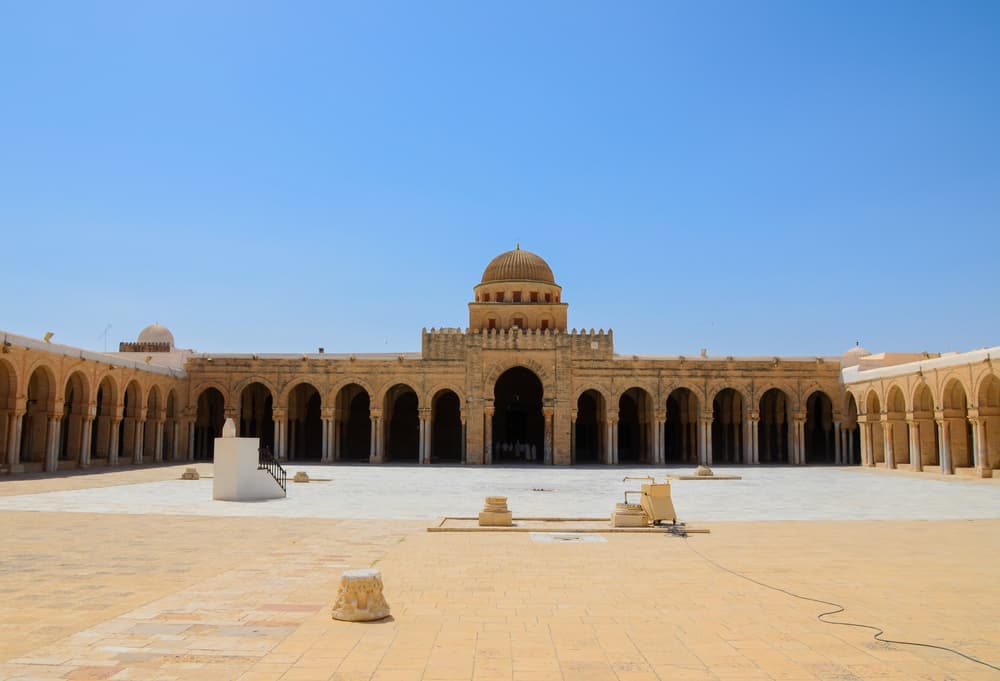
The open-air courtyard offers a serene setting. The horseshoe arches, marble columns recovered from antique sites and tiled floor create an architectural harmony typical of Maghrebi zaouïas.
The mausoleum of Sidi Sahbi
The burial chamber, accessible to non-Muslim visitors up to the threshold, is surmounted by a decorated dome. The atmosphere is one of reverence: pilgrims come regularly to pay their respects, giving the place a living spiritual dimension.
Etiquette and visiting rules
- Remove your shoes before entering sacred covered spaces.
- Dress in a covered manner: long sleeves, trousers or long skirt, headscarf for women.
- Speak in a low voice; avoid loud talking in the mausoleum.
- Respect areas reserved for people in prayer.
- Ask permission before photographing people at prayer.
Photography tips
Morning light, when the sun enters at an angle into the central courtyard, reveals the reflections of the zellige tiles. Frame the arcades in perspective to emphasise the depth of the galleries. Inside the vestibules, light is dim: a high ISO setting or a lightweight tripod improves results. Avoid using flash in spaces of contemplation.
Location and access
The Barber's Mosque is located in the medina of Kairouan, a few minutes' walk from the Grand Mosque of Kairouan. Kairouan is accessible from Tunis by road (approximately 160 km to the south-west) or by bus from Bab Alioua bus station. In the medina, the site is easily reached on foot from most hotels in the historic centre. Wheelchair access is limited due to cobblestones and thresholds in the inner courtyards.
Nearby attractions
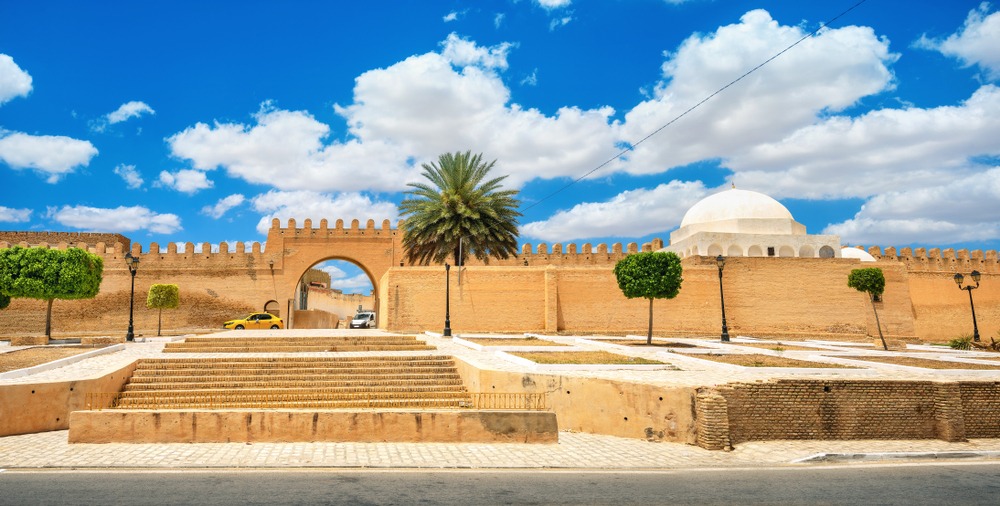
- Grand Mosque of Kairouan — one of the oldest mosques in Africa, a few minutes' walk away.
- Aghlabid Basins — 9th-century hydraulic reservoirs, testimony to medieval Arab engineering.
- Kairouan Museum — Islamic art collections and regional archaeological objects.
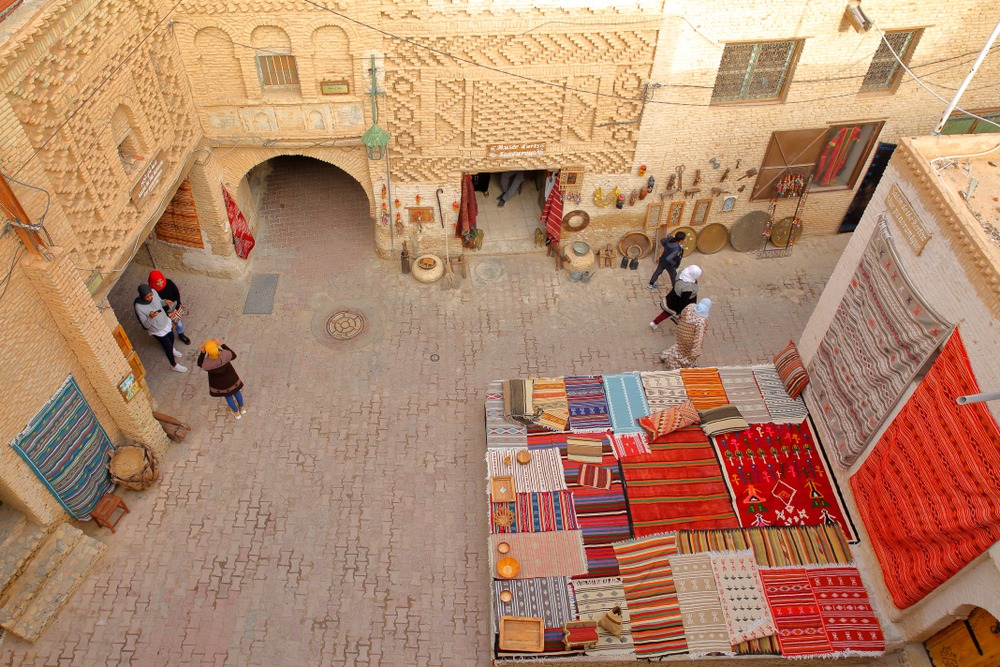
- Medina of Kairouan — craft souks, carpets and embroidery in an urban fabric listed as a UNESCO World Heritage site.
Frequently asked questions
Yes. Unlike the Grand Mosque of Kairouan, the Zaouïa of Sidi Sahbi is open to non-Muslim visitors for an admission fee. Access to the inner mausoleum may be restricted during prayer times.
Shoulders and knees covered for everyone. Women are invited to wear a headscarf. Covering garments are sometimes provided at the entrance, but it's best to bring your own.
Yes, both sites are close to each other in the medina. A group ticket covering the main monuments of Kairouan is usually available at the local tourism office.
Photography of architectural features is generally tolerated. Avoid photographing people at prayer without their consent and refrain from using flash in spaces of contemplation.
Spring (March–May) and autumn (September–November) offer pleasant temperatures for exploring the medina on foot. Summer is very hot; plan visits for early morning.
Allow 30 to 45 minutes to explore the courtyards, galleries and mausoleum at your own pace. Combined with the Grand Mosque and the Aghlabid Basins, set aside half a day for everything.
Interested in this visit?
We can include it in your personalised itinerary.