Tunis and Carthage
Gateway to Tunisie, the capital combines a UNESCO-listed medina, the archaeological site of Carthage and the blue façades of Sidi Bou Saïd across 30 km of coastline.
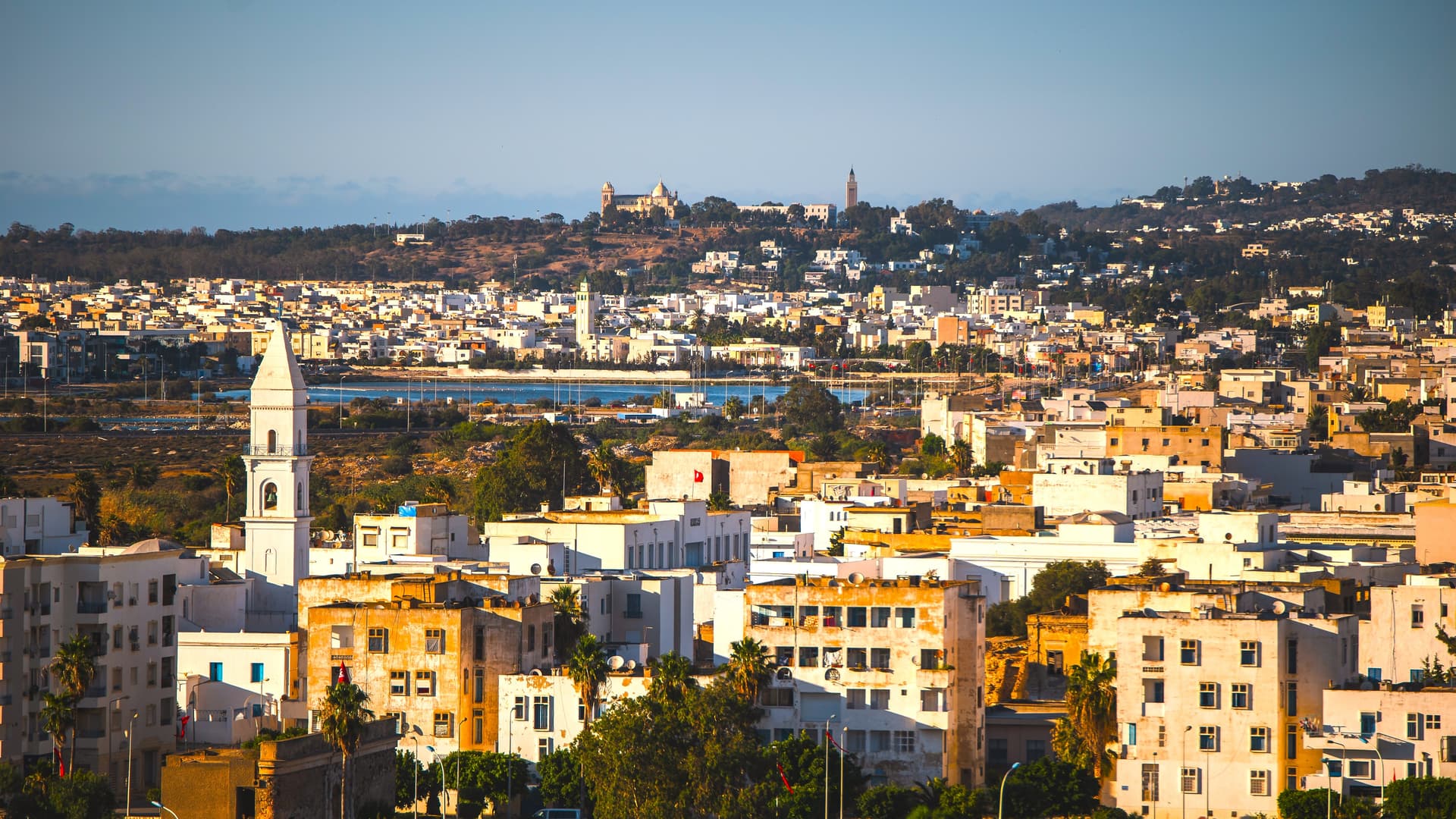
Tunis and its northern suburbs form an urban and coastal strip of roughly thirty kilometres, wedged between Lake Tunis to the east and the hills of Belvédère and Manouba to the west. This is where nearly all our travellers arrive, at Tunis-Carthage airport located ten minutes from the centre. From our capital offices, we launch the majority of our itineraries with one or two days in the region before heading to Kairouan, Cap Bon or the south.
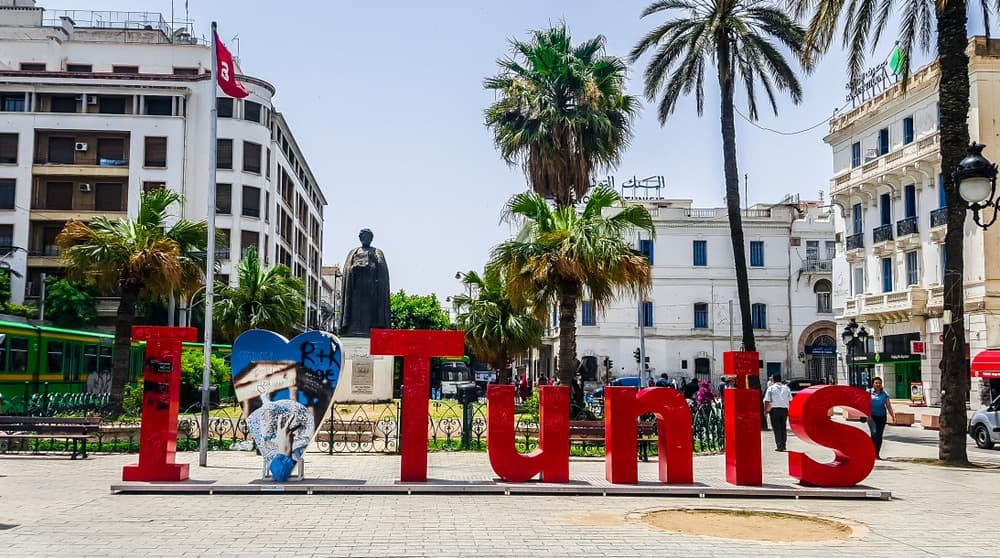
The Medina of Tunis, inscribed as a UNESCO World Heritage site in 1979, covers nearly 270 hectares and concentrates around 700 monuments. Its heart, the Zitouna Mosque founded in the 8th century, serves as a landmark for navigating the souks. Each trade still occupies its own street: Souk El Attarine for perfumers, Souk des Chéchias for red felt caps, Souk El Berka for jewellers. Several Ottoman palaces from the 17th and 18th centuries have been converted into cafés, restaurants or museums: Dar Lasram, Dar Ben Abdallah, Dar El Jeld. At the western exit, Kasbah Square marks the transition to the modern city, with Habib Bourguiba Avenue, lined with fig trees, extending the east-west axis to the lake.
About twenty minutes to the north, the TGM, a suburban railway opened in 1872, connects Tunis to La Goulette, Carthage and La Marsa. The archaeological site of Carthage cannot be visited in a single stretch: it spreads across seven distinct sectors covering Byrsa Hill, the Antonine Baths facing the sea, the horseshoe-shaped Punic ports, the amphitheatre and Roman villas. Plan half a day to cover the three main sites with a guide, otherwise you'll miss the Punic, Roman and Byzantine layers. The National Museum of Carthage, on Byrsa, provides the interpretive keys.
Sidi Bou Saïd, perched on the cliff just north of Carthage, owes its whitewashed façades and cobalt-blue wooden screens to a municipal decree of 1915 imposed by Baron Rodolphe d'Erlanger, a musicologist settled in the Ennejma Ezzahra palace, now a centre for Arab and Mediterranean music. The village can be explored in an hour but deserves a late afternoon with pine nut tea at Café des Nattes or Café Sidi Chabaane overlooking the marina. Further on, La Marsa and Gammarth line up beaches, fish restaurants and seaside hotels used at the start or end of an itinerary.
On the culinary side, the region has developed a cuisine of port and court: egg brik, lablabi served in a bowl with stale bread and harissa, whole fish baked in the oven at La Goulette, date makroud from medina pastry shops. Tunis's central markets, notably the one on Charles de Gaulle Street, give a good reading of agricultural seasonality: Maltese oranges from Menzel Bouzelfa in winter, strawberries from Korba in spring, figs from Djebba in summer. Climate-wise, the position at the gulf's head and the proximity of the lake temper extremes: 12 to 14°C average in January, 26 to 28°C in July-August, with constant sea breeze in the afternoon on the northern coast.
Beyond tourism, this is where a third of the country's population is concentrated, government headquarters, universities and the majority of businesses. This gives the region a distinctly urban character, sometimes congested at rush hours between 8 and 9:30 am, which contrasts with the interior and Saharan Tunisie that our travellers discover next.
To discover
Souks of the Medina of Tunis. A morning's walk between Zitouna and Bab El Bhar, with a stop for perfume at an attarine and tea on the terrace of Palais d'Orient overlooking the rooftops.
Archaeological site of Carthage. A guided half-day between the Antonine Baths by the sea, the Punic ports and Byrsa Hill to read the Punic, Roman and Byzantine layers.
Sidi Bou Saïd in late afternoon. Cliffside village, white and blue façades codified since 1915, pine nut tea overlooking the gulf as light falls on Gammarth.
National Museum of Bardo. Former beylical residence housing the world's largest collection of Roman mosaics, including the portrait of Virgil and the hunting scenes of Dougga.
Fish lunch at La Goulette. Port district ten minutes by TGM, sea bream with salt or grilled red mullet at Le Café Vert, with fishermen returning from the commercial harbour in the background.
When to go
The region can be visited year-round thanks to its Mediterranean climate tempered by the gulf. The most comfortable periods are March to May and September to November, with 18 to 24°C during the day, still mild evenings and ideal light for the medina and archaeological sites in full sun like Carthage or Bardo. July and August remain manageable on the coast, between 26 and 30°C with sea breeze, but central Tunis can exceed 35°C during sirocco episodes from the south, generally two to four days in a row.
In winter, from December to February, temperatures oscillate between 8°C at night and 15 to 17°C in the afternoon, with rainfall concentrated on November and December, around 60 mm per month. These are short showers rather than entire rainy days. We especially advise against Ramadan weekends for those wanting to enjoy the medina, as shops close early and restaurants only open at sunset. The date of Ramadan shifts each year by roughly eleven days.
Practical advice
Two to three full days are enough for the region: one day for the medina and Bardo, a second for Carthage, Sidi Bou Saïd and La Marsa, possibly a third for an excursion to Zaghouan or Utica. With Tunis-Carthage airport ten minutes from the centre, it's our logical entry point for all itineraries. From Tunis, reach Kairouan in 1h45 by the A1 motorway, Hammamet and Cap Bon in 1 hour, Tabarka and the north-west coast in 2h30. For the south, Djerba and the Sahara, we favour the 1-hour domestic flight from Tunis to Djerba or Tozeur to save a day of driving.
Comfort levels are high: 4 and 5-star hotels in Gammarth and La Marsa for beach stays at the start or end of a trip, guesthouses in restored medina palaces (Dar Ben Gacem, Dar El Jeld) for urban immersion. The region suits all profiles, with special mention for travellers interested in archaeology, Islamic architecture and cuisine. Families with children appreciate the combination of medina in the morning and beach in the afternoon, easy to organise thanks to short distances.