Sahara and Oases
From Chott el-Jérid to the dunes of the Grand Erg Oriental, southern Tunisie combines irrigated oases dating back to the 13th century, camel camps and Berber mountain oases.
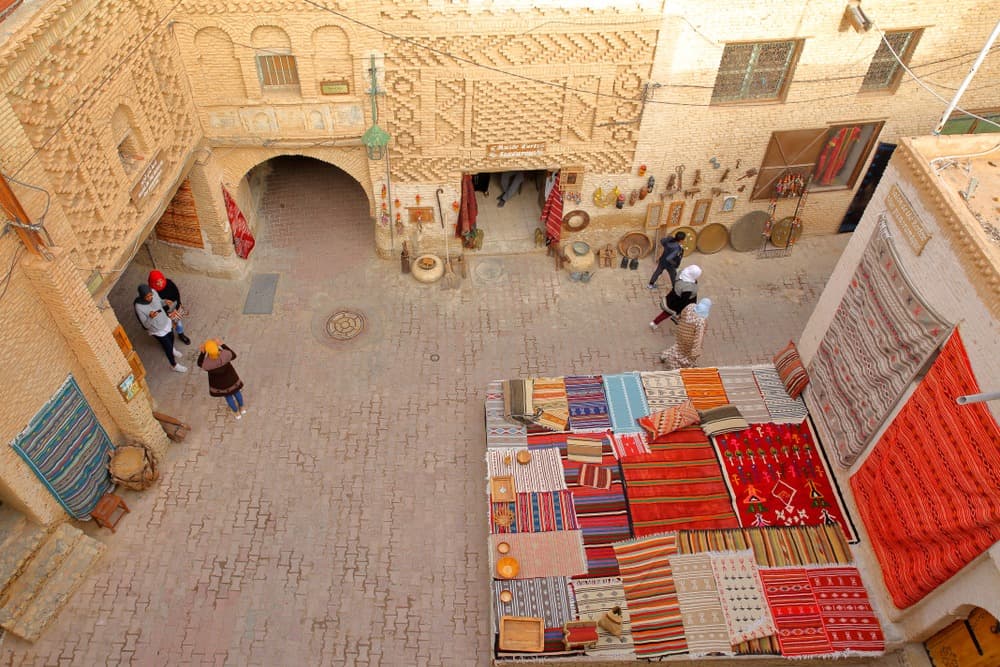
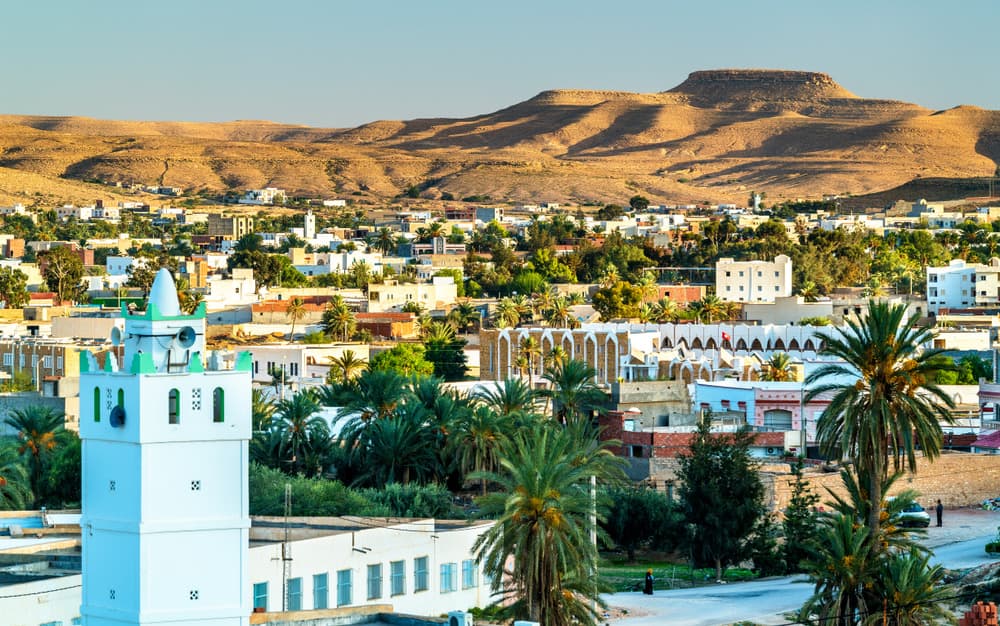
Southern Tunisie truly begins at Tozeur, 450 km southwest of Tunis, where the road shifts into another world entirely. The ochre-colored bricks of the Ouled el-Hadef district, laid in geometric patterns inherited from the 14th century, signal a Saharan architecture unlike anything in the North. Around the city, the palmery stretches across nearly 1,000 hectares, irrigated since the 13th century by a water distribution system designed by Ibn Chabbat, a local mathematician and jurist. Our team works with guides from these oasis-farming families who still cultivate in tiers: date palms, pomegranates, henna and market gardens at ground level.
About twenty kilometers away, Nefta extends this oasis logic with its Basket, a natural depression where springs once flowed, now largely depleted by agricultural drilling. The two cities produce most of Tunisie's Deglet Nour, the translucent date harvested in late October and November, which represents the country's primary agricultural export to Europe. Over 200 varieties are cultivated locally, many never leaving the region: Kenta, Allig, Khouat Allig, each with specific uses depending on ripeness.
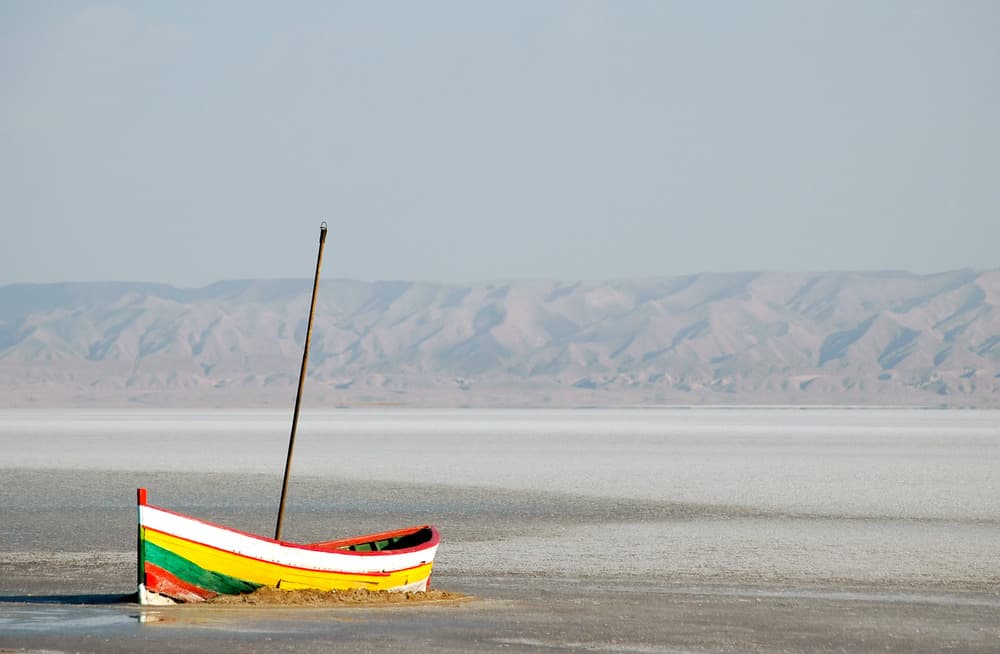
To the south, the road crosses Chott el-Jérid, an immense salt expanse covering nearly 5,000 km² that separates the Jérid from the Nefzaoua. The crossing is made on a straight causeway built in the 1980s, roughly 80 km of cream-colored salt, sometimes tinged pink depending on the light, with mirages of water that are not mere illusion. In winter, after rare rains, a thin film of water can cover the surface and reflect the sky entirely. The passage takes about an hour and geographically marks entry into the Nefzaoua.
On the other side, Kebili and especially Douz serve as pivot points toward the Grand Erg Oriental. Douz, once a caravan market on the Ghadamès route, retains its Thursday souk where sheep, camels and Maghrebi carpets woven by M'razig tribal women are still sold. Our camel camps depart from Douz, typically for 2 to 5 days, heading toward the Ofra dunes or further to Ksar Ghilane. This latter site, 60 km by piste track, combines remains of the Roman limes (the Tisavar fort, 2nd century) and a natural hot spring at 38°C, which flows into a basin surrounded by palms.
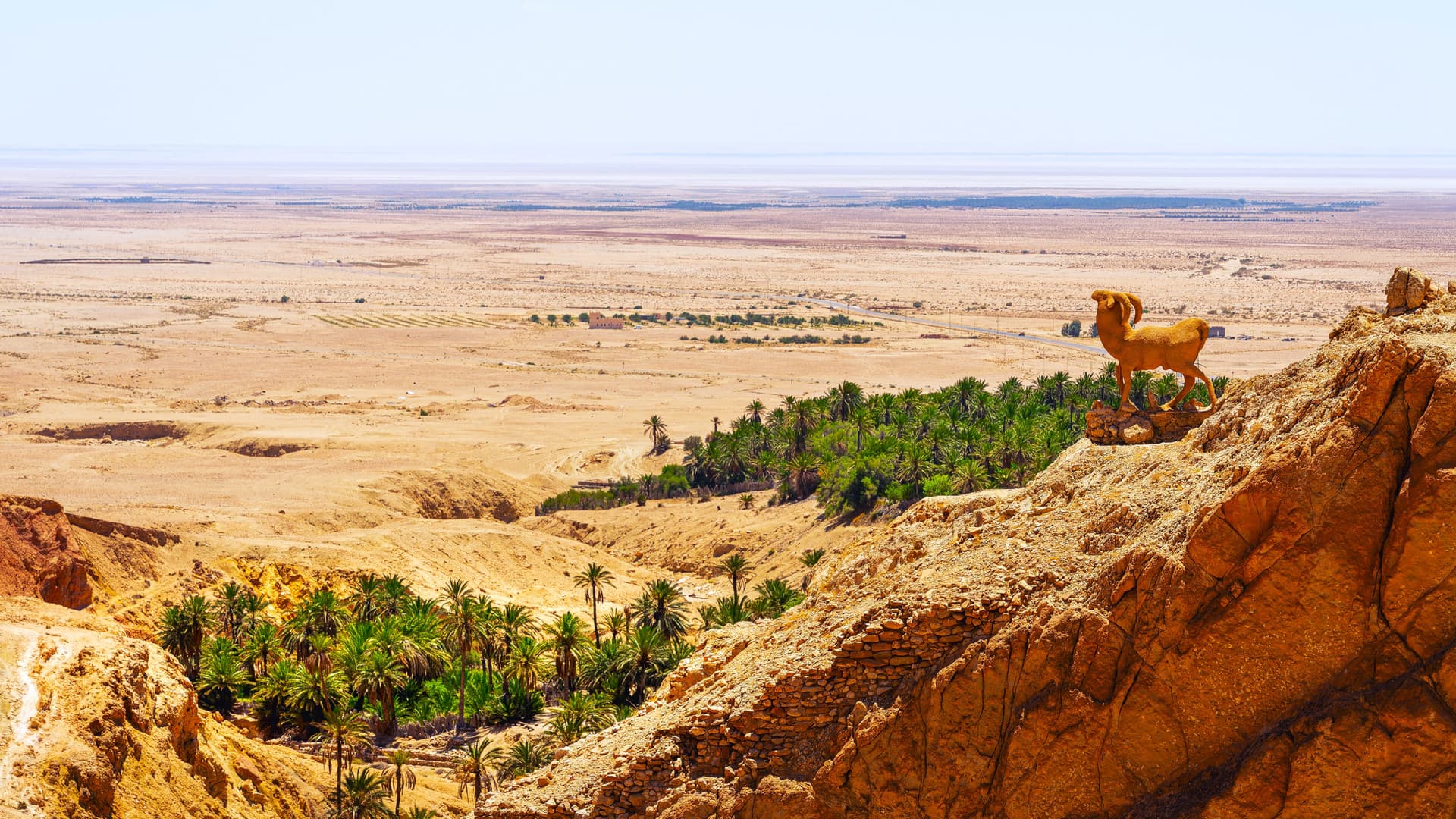
Further west, heading toward the Algerian border, the mountain oases shift register entirely. Chebika, Tamerza and Mides cling to the Djebel el-Negueb ridges at 500-600 m altitude. Water descends here in cascades, brief but permanent, and the ancient Berber villages, abandoned after the floods of 1969, overlook the new settlements. The Mides gorges, plunging a hundred meters deep, mark the Algerian frontier. This zone is visited by 4x4 on a day trip from Tozeur, returning via the Star Wars filming locations at Ong el-Jemel, a dune named for its camel-like shape.
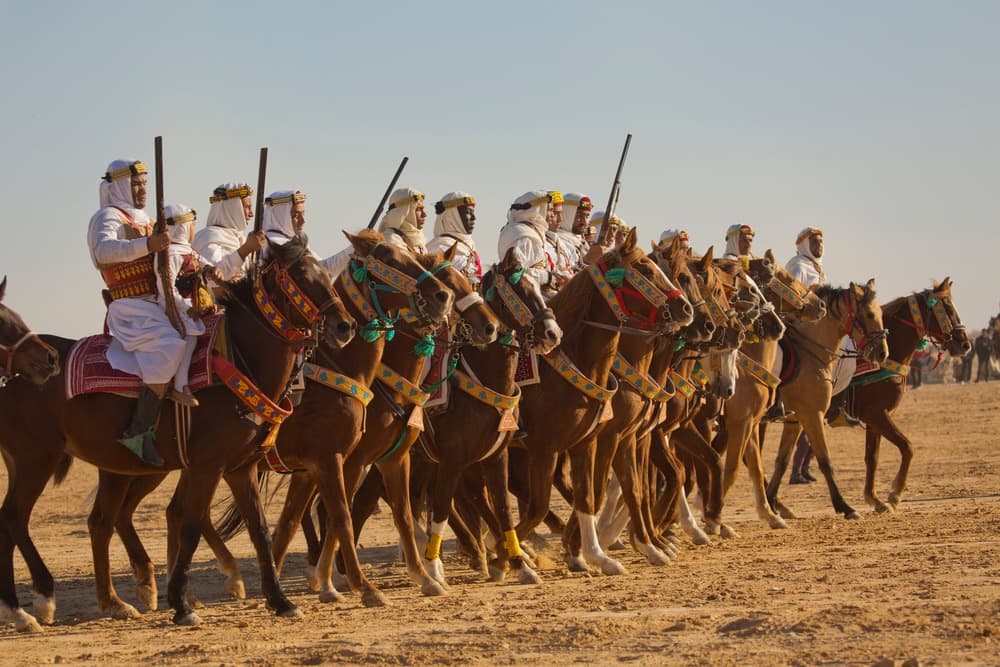
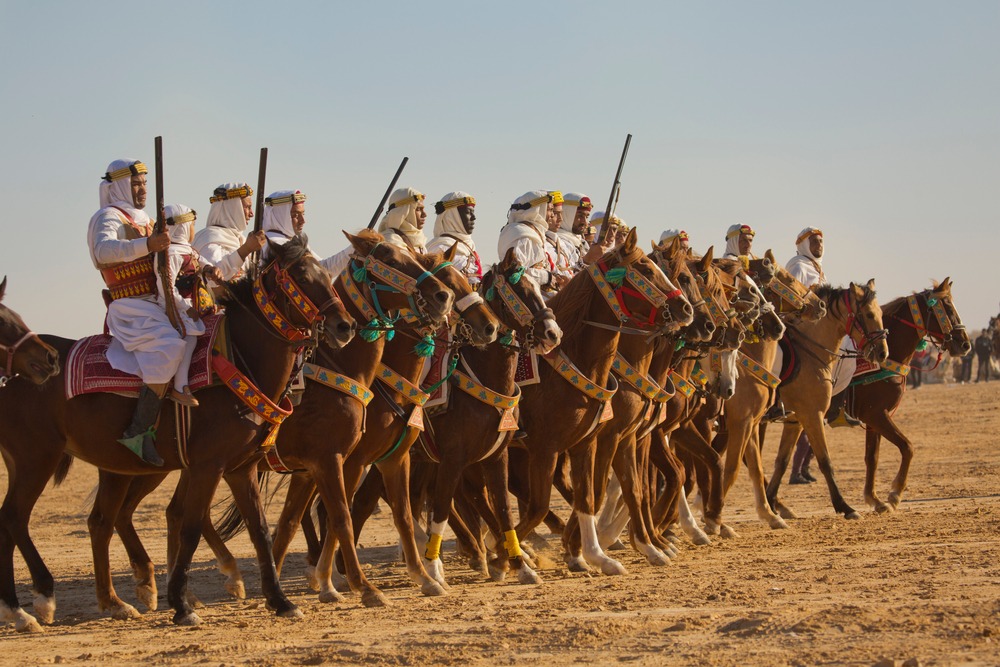
On the human side, the region remains marked by former semi-nomadic tribes—M'razig, Adhara, Sabria—sedentarized in the 20th century but retaining an active pastoral memory. The Sahara Festival in Douz, end of December, brings together camel races, salouki dog competitions and falconry demonstrations. At table, you'll find local jerbi rice (rice with herbs and dried fish brought up from the coast), chakhchoukha of torn bread, and of course bread baked in hot sand during camps.
To Discover
Camel camp toward Ksar Ghilane. Three to five days of walking from Zaafrane, nights in Berber tents within dune corridors, arrival at the hot spring and Roman fort of Tisavar.
Crossing Chott el-Jérid. 80 km of straight causeway across salt crust reaching 80 cm thick, permanent mirages at midday, pink light in late afternoon.
Mountain oases of Djebel el-Negueb. Chebika, Tamerza and Mides perched on cliffs, year-round cascades and ancient Berber villages abandoned in 1969 after torrential rains.
Palmeries of Tozeur and Ibn Chabbat. Guided walk through tiered gardens, explanation of the 13th-century water distribution system, tasting of Deglet Nour, Kenta and Allig varieties in season.
Thursday souk in Douz. Livestock market where M'razig herders from the desert meet, trading in Maghrebi carpets and stalls of henna, harissa and dried meat.
When to Go
The reasonable window extends from October through April. In midwinter, from mid-December to mid-February, mornings hover around 6 to 9°C in the oases and can drop below freezing in the desert before sunrise. Days remain comfortable, between 17 and 22°C, making hiking and 4x4 travel very pleasant. March and April offer the best compromise, with 12°C mornings and 25°C afternoons, and nights under canvas manageable without heavy gear. October and November work well too, with the added bonus of coinciding with date harvest.
From mid-May to mid-September, we firmly advise against the region. Temperatures regularly exceed 42°C in Tozeur and Douz, desert sand becomes impassable, and camel herders themselves suspend most long excursions. The ghibli sandstorm can blow for days on end in late spring and early summer, reducing visibility to dozens of meters. Rare rains fall in November-December and March, brief but sometimes violent, enough to temporarily close the mountain oasis tracks.
Practical Advice
Plan a minimum of 4 days to grasp the region: one day for the palmeries of Tozeur and Nefta, one day for mountain oases by 4x4, one day for crossing the chott and arriving at Douz, and at least one night camping in the dunes. For real Saharan time with camel trekking all the way to Ksar Ghilane, allow 6 to 7 days in the area. Tozeur-Nefta airport receives domestic flights from Tunis (1h10), avoiding 6 hours of driving. Otherwise, road access from Tunis takes two days with a stop in Kairouan or Sbeitla.
The most coherent combination pairs the Sahara with Djerba and the Southeast (Kairouan-center as possible transition), with a loop that descends through Tozeur, cuts across toward Douz, reaches Matmata and its troglodyte dwellings, then finishes at Djerba for a few days by the sea. For travelers departing from Tunis and Carthage, adding Kairouan and the center allows seamless progression without jarring cultural rupture. Comfort ranges from modest Berber camping (communal tents, shared facilities) to palmery ecolodges like Dar Hi in Nefta or Anantara Sahara in Tozeur. The region suits contemplatives, hikers and families with children from age 8 onward, provided you avoid camels on long stages with younger children.