Kairouan and Central Tunisia
Central Tunisia stretches from the minarets of Kairouan to the Capitoline temples of Sbeïtla, spanning thirteen centuries of history between olive groves and semi-arid steppes.
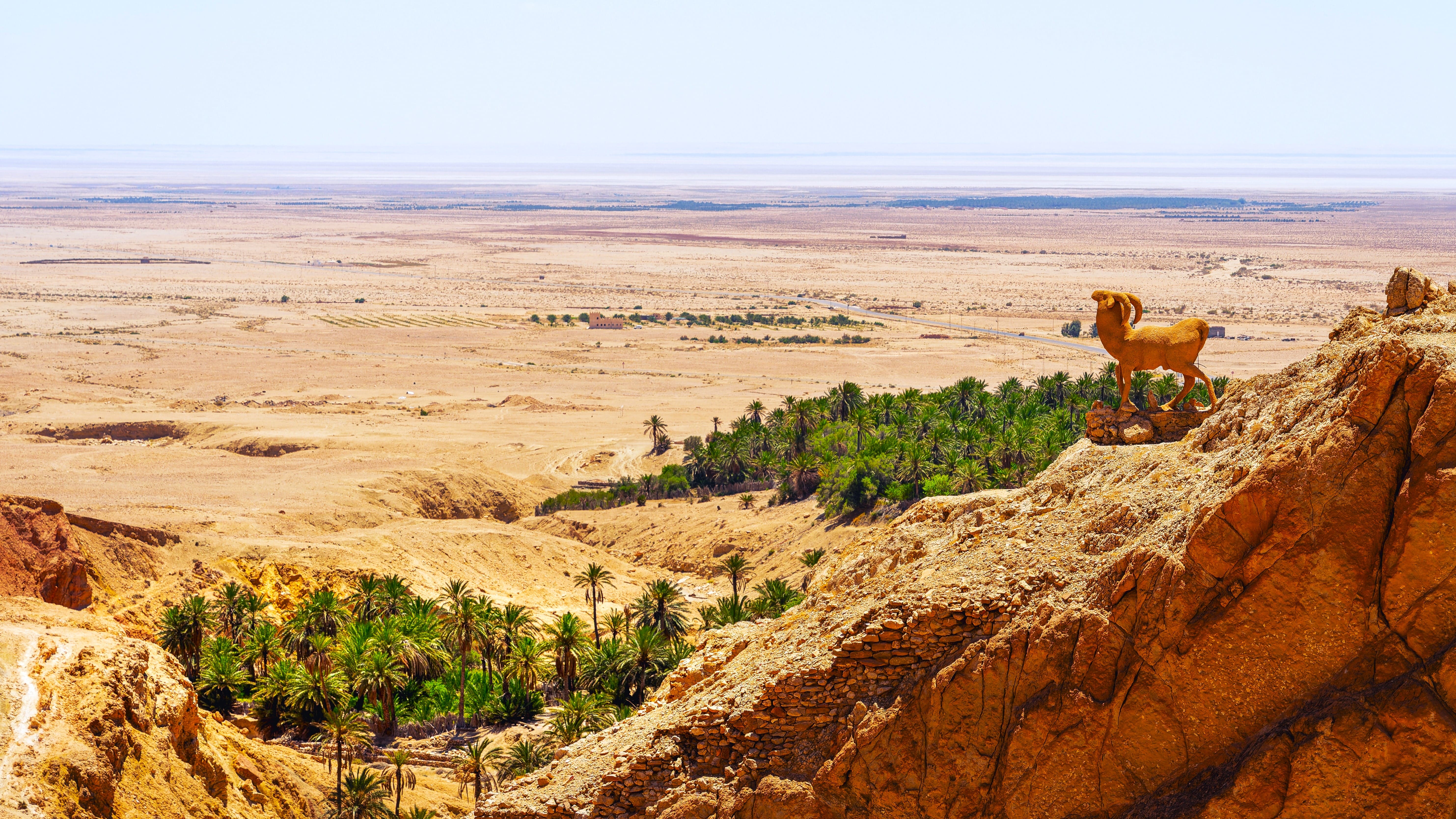
Central Tunisia extends from the cereal plains of the southern Tell to the semi-arid steppes announcing the Sahara. Our team brings travelers here who want to understand the historical depth of the country, beyond the coast. Here, landscapes open up: olive groves stretching to the horizon around Sfax and Kairouan, bare hills of the Dorsal around Le Kef, halfa plains between Kasserine and Sbeïtla. Towns are scattered, villages often reduced to a handful of white houses clustered around a mosque and a café where men play cards in the afternoon.
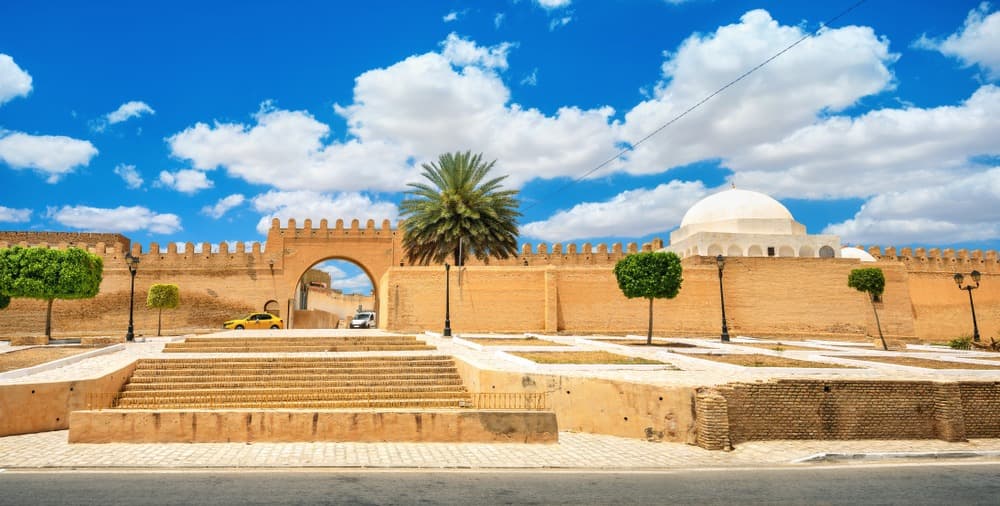
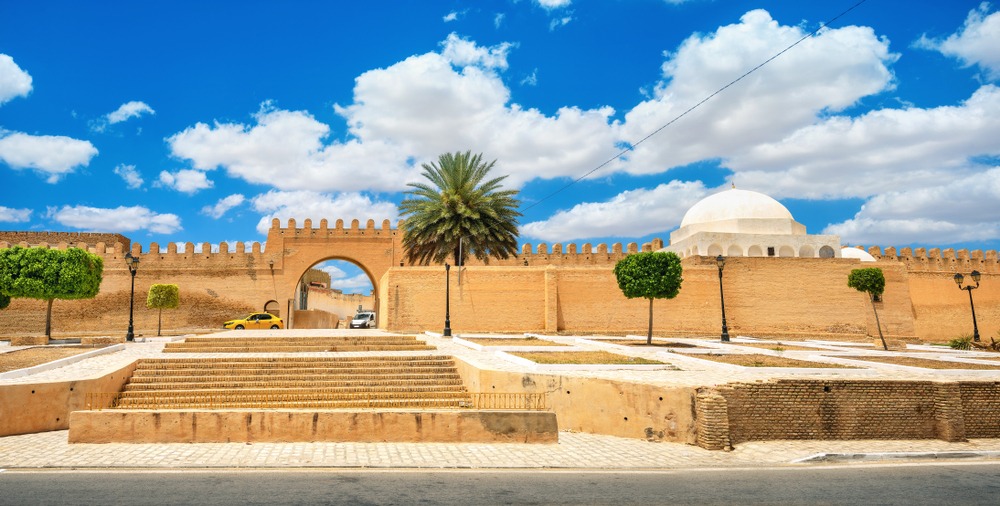
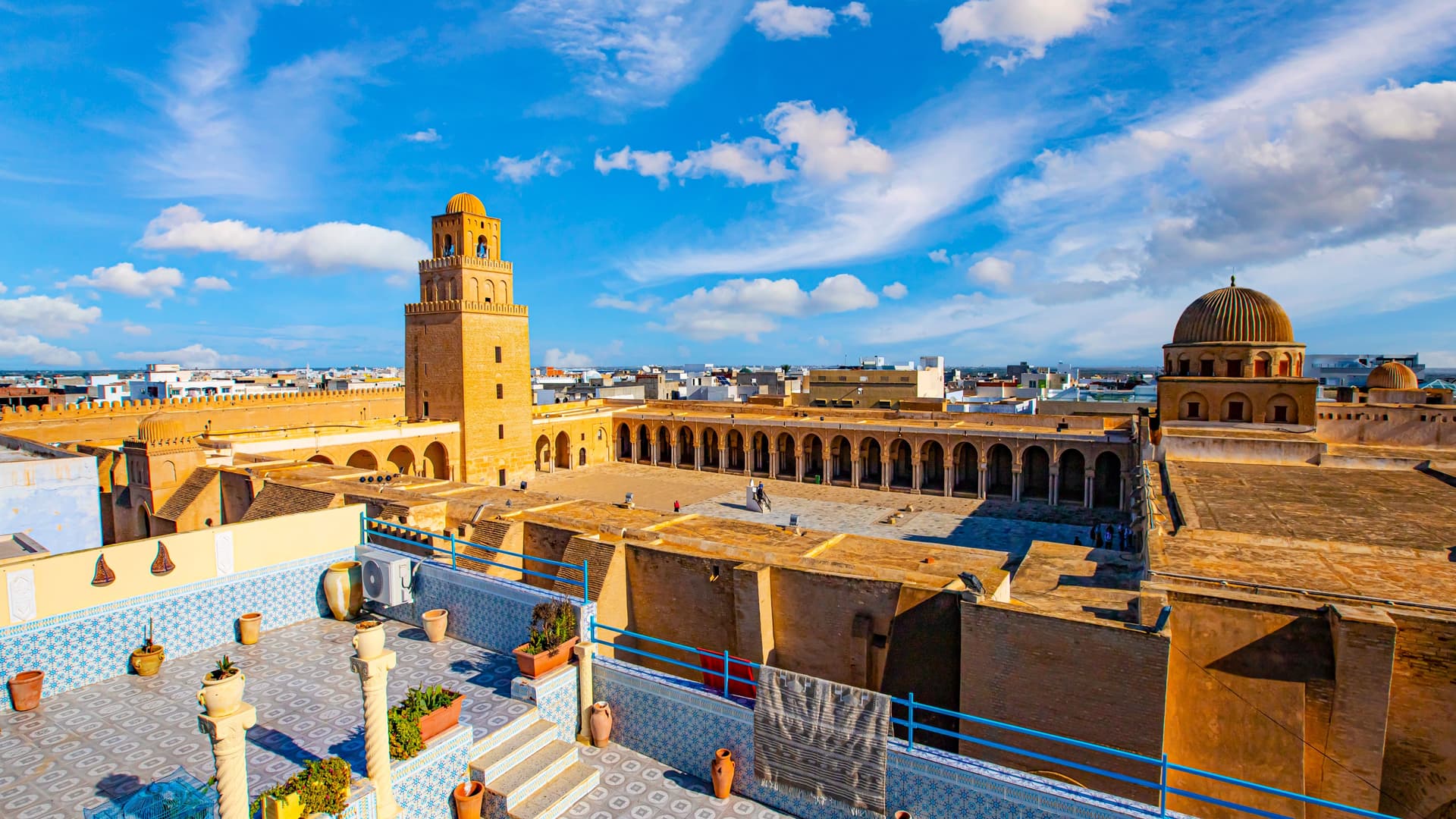
Kairouan remains the spiritual heart of Tunisia. Founded in 670 by Oqba Ibn Nafi, it is the fourth holiest city in Islam after Mecca, Medina and Jerusalem. Its Great Mosque, with its marble-paved courtyard and prayer hall containing 414 reused ancient columns, testifies to thirteen centuries of religious continuity. The 9th-century Aglabid pools, two large circular cisterns that once supplied the city with water, can be visited in half an hour. The medina still houses carpet-weaving workshops, Kairouan zerbia having been inscribed with a protected designation of origin since 1992. Makroudh, semolina diamonds filled with dates and dipped in honey, are sold on Rue Ali Belhouane.
To the west, the steppe takes over. Sbeïtla, ancient Sufetula, preserves three adjacent Capitoline temples dedicated to Jupiter, Juno and Minerva—a rare configuration in the Roman world. The site, rarely crowded, can be explored on foot in two hours. Further north, Dougga, a UNESCO World Heritage site, overlooks the Oued Khalled valley from a plateau at 600 meters elevation. Its theater seating 3,500, its Capitol dating to 166 AD, and its Libyan-Punic mausoleum form the best-preserved Roman ensemble in North Africa. Makthar and Bulla Regia, the latter known for its semi-underground villas with mosaics in situ, complete this ancient network.
The region also counts highland Berber towns often overlooked. Le Kef, at 800 meters in the Tell, preserves its Ottoman kasbah and an old synagogue recalling the Jewish community that lived there until the 1960s. Further south, Takrouna, a village perched on a rocky outcrop 200 meters above the Enfida plain, can be crossed on foot in twenty minutes. Central shepherds still raise flocks of fat-tailed sheep, and the cuisine here is more rustic than in Tunis: mloukhia is dark and long-simmered, couscous served with mutton rather than fish.
Economically, central Tunisia lives from olives, wheat and livestock. The Sfax region produces nearly one-third of Tunisian olive oil. Weekly souks in Kairouan on Mondays, or in Makthar on Tuesdays, remain moments of genuine exchange between herders and farmers, far from tourist circuits. It is this historical density and preserved rurality that justify, in our view, venturing beyond the coast to cross the country.
Must-See
Great Mosque of Kairouan. Its rectangular marble-paved courtyard, sundial and 414 ancient columns reused in the prayer hall. Visit early morning to avoid tour groups from Sousse.
Roman Site of Dougga. Theater, Capitol and Libyan-Punic mausoleum on a plateau overlooking the Oued Khalled valley. Allow 3 hours for your visit, little shade—bring a hat and water.
Three Capitoline Temples of Sbeïtla. Unique configuration of three adjacent sanctuaries in the semi-arid steppe. You'll encounter more shepherds than visitors on weekdays.
Carpet-Weaving in Kairouan. Visit zerbia workshops in the medina, where knots can number up to 250,000 per square meter. Demonstrations possible with a master weaver.
Semi-Underground Villas of Bulla Regia. Roman dwellings built partially underground to escape summer heat, with mosaics of Neptune and Amphitrite preserved in place.
When to Visit
The best months to traverse central Tunisia are March to May, then October to November. In spring, plains are carpeted with poppies and green wheat, temperatures oscillate between 18 and 24 degrees Celsius by day—ideal for open-air archaeological sites like Dougga or Sbeïtla. Autumn offers similar conditions with lower-angled light toward evening.
In summer, June to September, heat regularly climbs to 35-38 degrees Celsius in the plains, higher around Kasserine and Sbeïtla. Visits to shadeless sites become exhausting after 11am. Winter, December to February, remains viable but cool: 8 to 14 degrees Celsius by day, nights between 2-5 degrees at altitude around Le Kef or Makthar, and sometimes sustained rain episodes in January. Pack a fleece and waterproof jacket for this season.
Practical Advice
We recommend a minimum of 3 full days to cover Kairouan, Sbeïtla and a site like Dougga or Bulla Regia, 4 to 5 days if you wish to add Le Kef and Makthar. The region is best explored by car with driver, distances being reasonable: 2.5 hours from Tunis to Kairouan, 1.5 hours from Kairouan to Sbeïtla, 2 hours from Dougga to Tunis. The logistical entry point is Tunis-Carthage airport, less often Enfidha for travelers coming from the Sahel.
The most coherent itinerary is Tunis and Carthage at the start of your trip, then central Tunisia, before heading to Djerba and the Southeast or turning toward the Sahara and oases. Accommodation is simpler than in Tunis or Hammamet: restored guesthouses in Kairouan's medina, mid-range hotels in Sbeïtla and Le Kef. This region suits travelers particularly interested in history, Roman and Islamic architecture, and direct contact with rural Tunisia. It will be less suitable for those seeking swimming and leisure.