Djerba and South-East Tunisia
An island swept by the breezes of the Gulf of Gabès, Berber village-granaries perched on the Dahar plateau, and the troglodytic dwellings of Matmata: South-East Tunisia condenses three worlds within 200 kilometres.
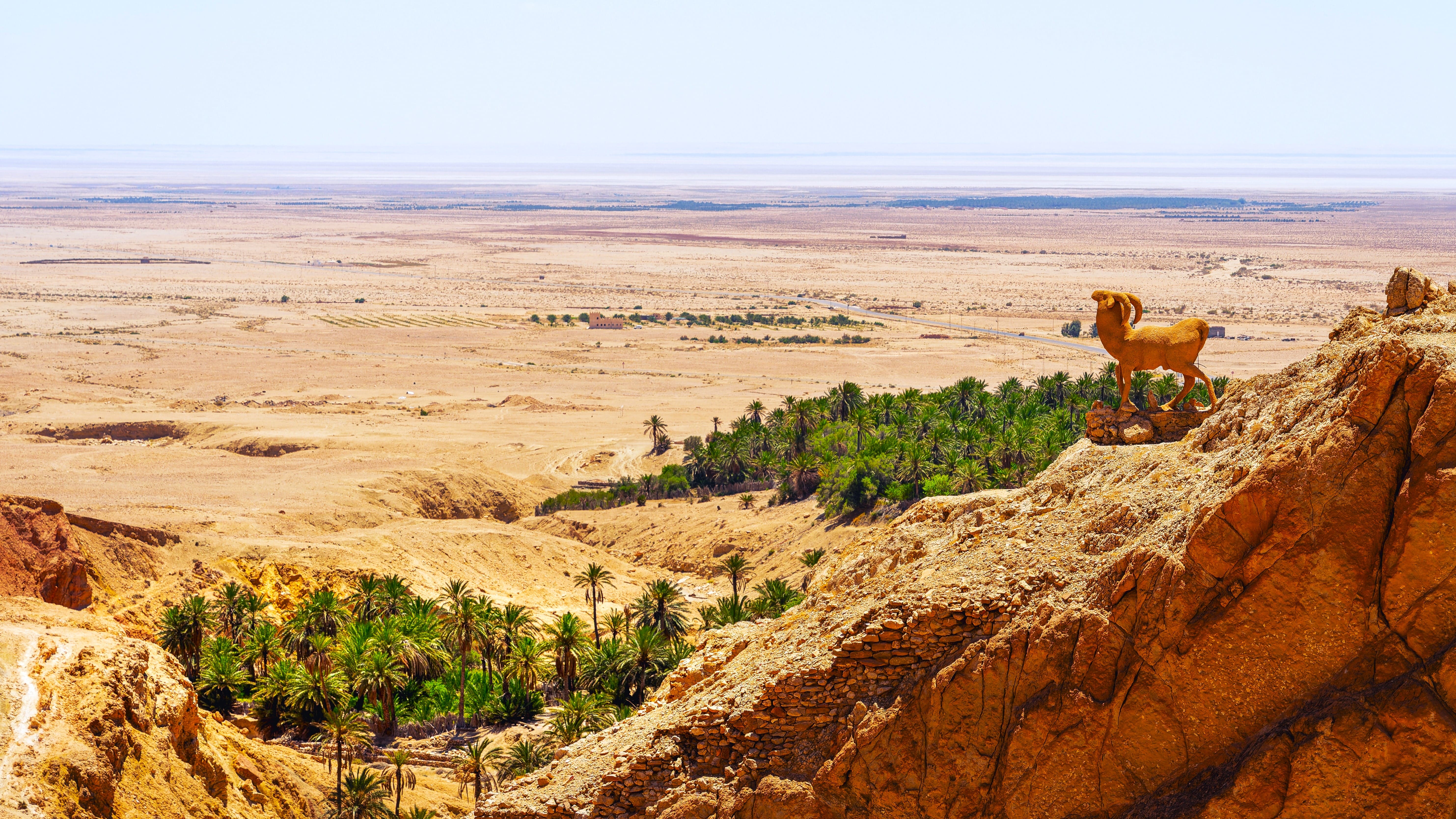
South-East Tunisia begins at Gabès, the country's last coastal oasis, and extends to the Libyan border. Our team considers it the most contrasting region of the territory: a flat island set in the Gulf of Gabès, Djerba, and just across the way on the mainland, the Dahar plateaus rising to 700 metres, carved with cliffs and dry riverbeds. In a single day's drive, you pass from the island's millennia-old olive groves to the ochre earth-dwellings of Matmata, then on to Berber fortified granaries perched on ridge-tops.
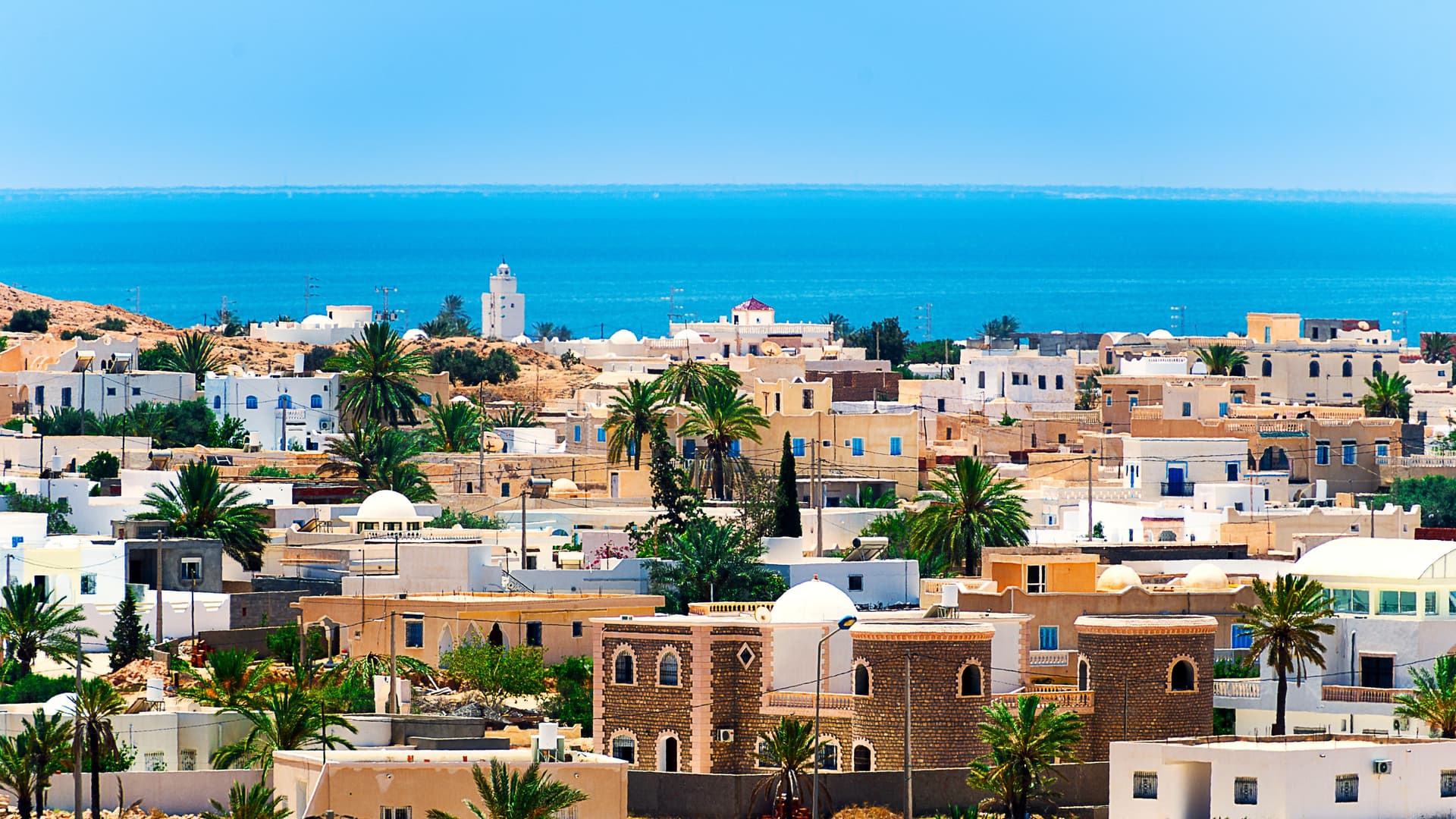
Djerba, connected to the mainland by the seven-kilometre Roman causeway of El Kantara, maintains a distinctive identity. The island still hosts a Jewish community around the Ghriba synagogue in Erriadh, a pilgrimage site each spring for centuries, and Berber-speaking villages such as Guellala, known for its wood-fired pottery. Houmt Souk, the capital, occupies former fondouks, those caravanserais where merchants once lodged; several have been converted into character hotels. The fish market, with its morning auctions, operates daily except Friday. Culinary tradition centres on grouper, dried octopus, and fish couscous spiced with local harissa.
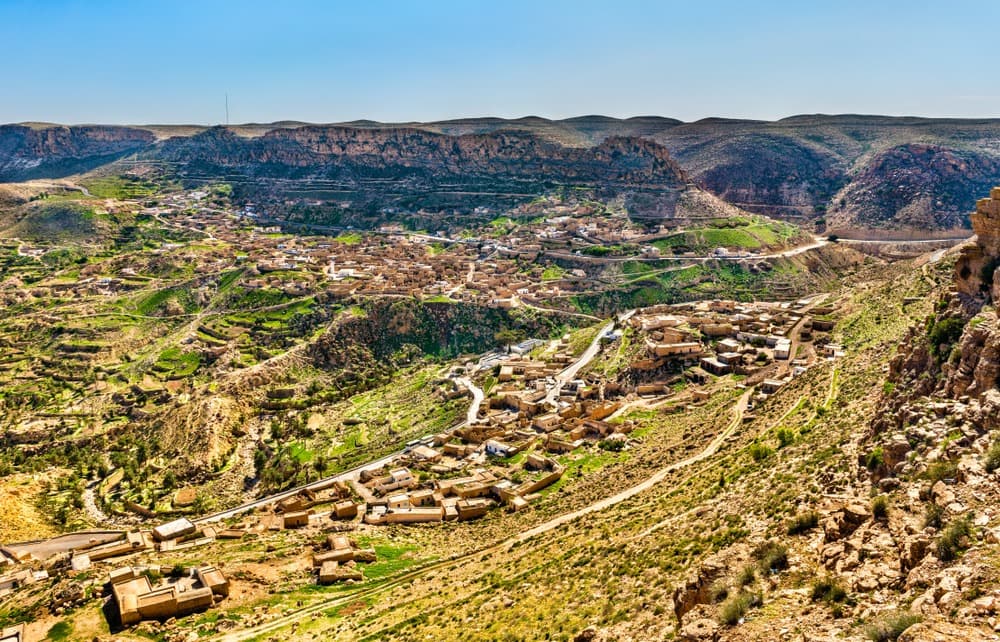
On the mainland, Matmata became famous after Star Wars filming in the 1970s, but the troglodytic houses still serve as dwellings: a central open-air courtyard, around which rooms are carved into soft rock. Further south, the Tataouine region concentrates the ksour, those Berber village-granaries. Chenini, Douiret and Guermessa cling to rocky spurs, their ghorfas (barrel-vaulted storage cells) stacked in multiple tiers. Ksar Ouled Soltane, better preserved, displays a courtyard surrounded by four storeys of rammed-earth ghorfas. These structures once stored barley and olive oil for semi-nomadic tribes that moved seasonally between the Dahar and the Jeffara plains.
Climate dictates the rhythm. The island, ventilated by sea breezes, remains bearable in summer, but the interior Dahar heats rapidly: 40°C in July at Tataouine, sometimes higher when the chehili, that hot Saharan wind, arrives. Conversely, February brings 18°C daytime on the coast and cool nights in the ksour, around 6°C. Spring, March to May, and autumn, October to mid-November, are our preferred windows for combining Djerba and the Dahar.
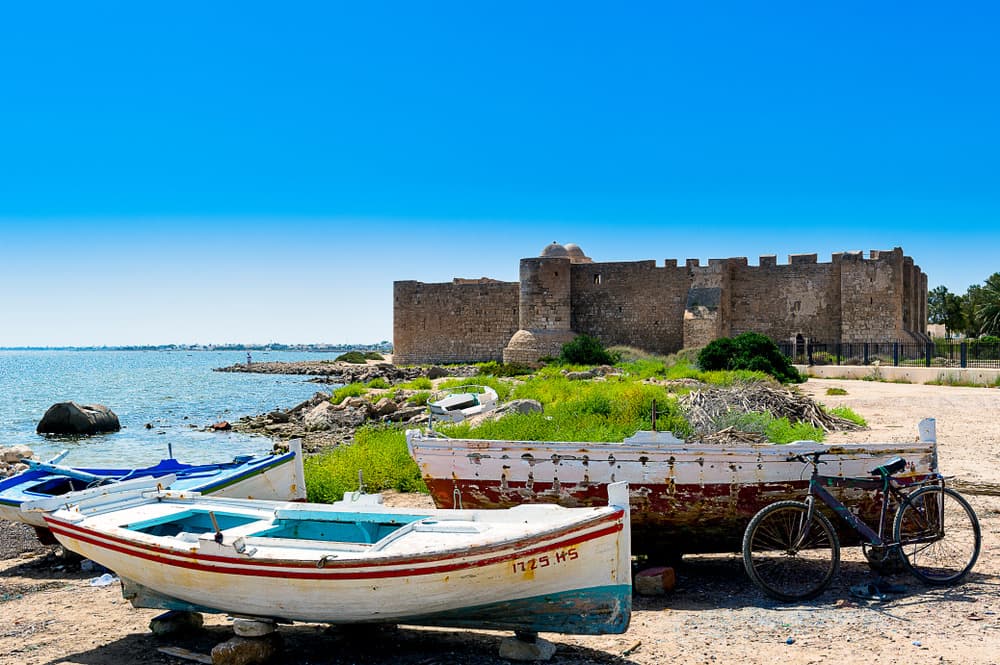
Local economy rests on octopus fishing using traditional clay jars (earthenware pots set on the seabed), olive cultivation, beach tourism concentrated in the hotel zone of Sidi Mahrez and Aghir in the north-east, and persistent craftsmanship: wool blanket-weaving in Toujane, pottery in Guellala, basketry in Midoun. In the ksour, a handful of guesthouses installed in restored ghorfas allow you to stay overnight, which changes everything: you watch the sun set over the plateaus and rise over the plain, without the day-trip coach convoys.
To discover
Ghriba Synagogue in Erriadh. Jewish sanctuary with cobalt-blue interior walls, founded by tradition after the destruction of the First Temple. Annual pilgrimage at Lag Ba'omer, in April or May.
Ksar Ouled Soltane and perched villages. Four storeys of barrel-vaulted rammed-earth ghorfas surrounding a courtyard. Twenty kilometres away, Chenini clings its white mosque to a rocky ridge, reached on foot from the lower village.
Troglodytic houses of Matmata. Dwellings carved crater-like into soft rock, still occupied. A night with a family in one of these courtyards reveals the thermal regulation: 22°C inside when it is 38°C outside.
Houmt Souk and its fondouks. Former caravanserais with courtyards converted into cafés and small hotels. Fish market with morning auctions, spice hall, and Jewish goldsmiths still active on rue Moncef Bey.
Toujane and the Dahar route. Weaver village clinging to a rocky balcony, halfway between Matmata and Médenine. Workshop of camel-wool blankets and views over the dry riverbeds of the Jeffara.
When to go
Our two best windows remain spring (mid-March to mid-May) and autumn (October to mid-November). Expect 22 to 27°C daytime, still-cool nights in the Dahar (10 to 14°C in April), and sharp light for photography in the ksour. Winter, December to February, remains feasible on the island at 17 to 19°C daytime, but evenings are decidedly cold at Tataouine and Chenini, around 6°C, and some troglodytic guesthouses offer little heating.
Summer calls for caution. On Djerba, sea breezes maintain manageable temperatures (32 to 34°C in July-August), and it is peak beach season. Inland, however, Matmata and Tataouine regularly exceed 40°C, reaching 45°C during chehili episodes. Visits to ksour between 11am and 4pm become taxing. If you travel in July or August, we concentrate mainland stages around dawn and late afternoon. Rain is rare, less than 200 mm yearly, chiefly in November and January.
Practical advice
We recommend a minimum of 5 days for the region: 2 days on Djerba (Houmt Souk, Erriadh, Guellala, plus a half-day beach), then 3 continental days for Matmata, Toujane, and the ksour loop around Tataouine with a night in a restored ghorfa. Djerba-Zarzis airport receives direct flights from Paris, Lyon and several European cities, making it the most logical entry point. From Tunis, allow 6.5 hours' drive or a one-hour domestic flight.
The most coherent combination is Djerba and South-East chained with Sahara and oases (sahara-oasis): from Tataouine, you reach Douz and the Chott el-Jérid in one day's drive, which logically extends your journey towards the dunes. For a longer circuit, adding Kairouan and centre (kairouan-centre) as you head back to Tunis makes sense. Comfort varies: international-standard hotels in the beach zone of Djerba, character guesthouses in the fondouks of Houmt Souk, and more rustic but authentic accommodation in the ksour. The region suits the contemplative, vernacular architecture enthusiasts, and families with children aged 7-8 onwards, capable of walking an hour on the trails of perched villages.