Monastir
Monastir
Monastir, on the Sahel peninsula in Tunisie, combines an 8th-century ribat, the mausoleum of Habib Bourguiba and a lively medina — an essential stop between Sousse and Mahdia.
Monastir is a coastal town in the Tunisian Sahel, built on a peninsula that juts into the Mediterranean. Known for its medieval ribat, well-preserved medina and the mausoleum of Habib Bourguiba, it blends ancient Islamic history with the legacy of Tunisie's first president. The marina, nearby beaches and direct air connections make it a convenient base for exploring the region.
Practical information at a glance
- Access: Monastir-Habib Bourguiba international airport, one of Tunisie's main airports; rail connections (Métro du Sahel) to Sousse and Mahdia.
- Recommended duration: A full day for the medina, ribat and mausoleum; two days to explore the surrounding area.
- Dress code: Appropriate attire required in places of worship and the mausoleum; shoulders and knees covered.
- Language: Tunisian Arabic; French is widely understood, English-speaking staff available in tourist areas.
What to see
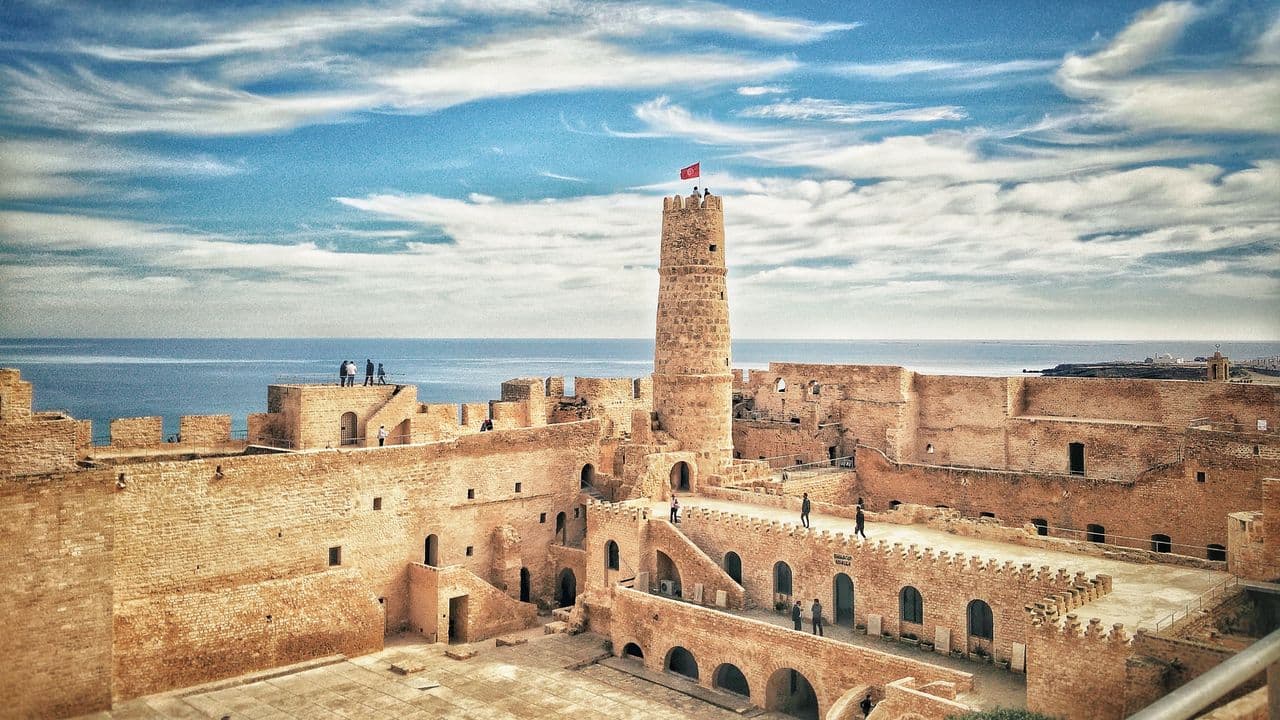
The Monastir ribat dominates the waterfront since the 8th century: its watchtowers, cells of warrior-monks and prayer hall constitute one of the best-preserved Islamic fortified complexes in the Maghreb. The medina surrounds the Great Mosque and its busy alleyways. The Bourguiba mausoleum, recognizable by its two gilded minarets and green dome, houses the tomb of the founder of the Tunisian Republic.
History and context
Founded on a Phoenician and Roman site, Monastir flourished under the Aghlabids in the 9th century. The ribat, built to defend the coast against Byzantine incursions, also became a center of spiritual life. The town is the birthplace of Habib Bourguiba (1903-2000), whose influence on modern Tunisie remains omnipresent: his mausoleum, completed in 1963 and enlarged several times, has become a place of national memory.
Highlights of your visit
The ribat
Climb the nador (watchtower) for a panoramic view of the sea and medina. Inside is a small museum of Islamic art with manuscripts, ceramics and ancient textiles. The ribat served as a backdrop for several films, including the Monty Python's Life of Brian.
The Bourguiba mausoleum
The building blends Ottoman and modernist influences. The interior courtyard, mosaics and colored stained glass deserve attention. The president's tomb and those of family members are located in the central hall.
The medina and Great Mosque
The Great Mosque of Monastir, dating back to the 9th century, features the sober architecture characteristic of the Sahel. Adjacent souks offer local textiles, jewelry and pottery.
The cemetery and ramparts
The vast cemetery adjoining the ribat testifies to the town's spiritual prestige: being buried near a ribat was considered a religious privilege. The ramparts offer a walk along the waterfront.
Etiquette and visiting rules
- Cover shoulders and knees to enter the mausoleum and Great Mosque.
- Remove your shoes before entering prayer spaces.
- Speak quietly inside the mausoleum, a place of reflection.
- Ask permission before photographing people at prayer.
Photography tips
Morning light is ideal for photographing the ribat from the harbor, with the sea's reflection. In late afternoon, the mausoleum's gilded minarets capture warm light. From the ribat's nador, a wide-angle lens allows you to frame the medina and coast in a single shot. Photography is permitted in most outdoor areas; check restrictions at the entrances to interior rooms.
Location and access
Monastir is located on Tunisie's eastern coast, about 20 km south of Sousse and about 60 km south of Tunis. The Métro du Sahel connects Monastir to Sousse and Mahdia regularly and affordably. The airport is located a few kilometers from the town center; taxis and shuttles serve the medina. The historic center is compact and can be explored on foot.
Nearby attractions
- Sousse — Major Sahel city with a Unesco-listed medina and ribat comparable to Monastir's.
- Mahdia — Former Fatimid capital at the tip of a peninsula, known for its silk weaving and authentic atmosphere.
- El Jem — Roman amphitheater among the best preserved in the world, about 60 km south.
- Kairouan — Fourth holiest city in Islam, about 70 km inland, with the Great Mosque of the Aghlabids.
Frequently asked questions
Spring (April-May) and fall (September-October) offer pleasant temperatures for visiting the medina and ribat. Summer is hot and crowded; winter remains mild but some sites may have reduced hours.
The mausoleum is generally open to non-Muslim visitors. Appropriate attire is mandatory: shoulders and knees covered, shoes removed at the entrance to the prayer hall.
The Métro du Sahel connects the three towns conveniently. Allow one day per city for a thorough visit, or two days to explore Monastir and make excursions to Sousse and Mahdia.
Photos are generally permitted in outdoor areas and from the nador. Some interior rooms may have restrictions; inquire at the entrance.
One day is sufficient for the ribat, mausoleum and medina. Two days allow you to explore the harbor, nearby beaches and make an excursion to El Jem or Kairouan.
Yes, Monastir has beaches on its peninsula and in the immediate surroundings. The Skanes area, near the airport, has several hotel complexes with sea access.
Want to discover this destination?
Our local advisors design your tailor-made trip.