Sousse
Sousse
Sousse brings together a UNESCO-listed medieval medina, a 9th-century ribat, a museum of Roman mosaics and a Mediterranean waterfront — all just 140 km from Tunis.
Sousse is a coastal city on the Sahel region of Tunisie, approximately 140 km south of Tunis. The country's third-largest city, it blends a medieval medina listed as a UNESCO World Heritage site, a lively waterfront and an agricultural hinterland shaped by olive groves. Its Phoenician, Roman, Aghlabid and Ottoman heritage is visible in every quarter.
Practical information at a glance
- Access: central railway station connected to Tunis (Tunis–Sfax line); Enfidha-Hammamet international airport approximately 40 km north.
- Light metro: Sahel Rail connects Sousse to Monastir and Mahdia.
- Recommended duration: 1 to 2 days for the medina, museum and beaches.
- Dress code: modest attire required in places of worship and the medina.
- Currency: Tunisian dinar (TND); cash payment often preferred in souks.
What to see
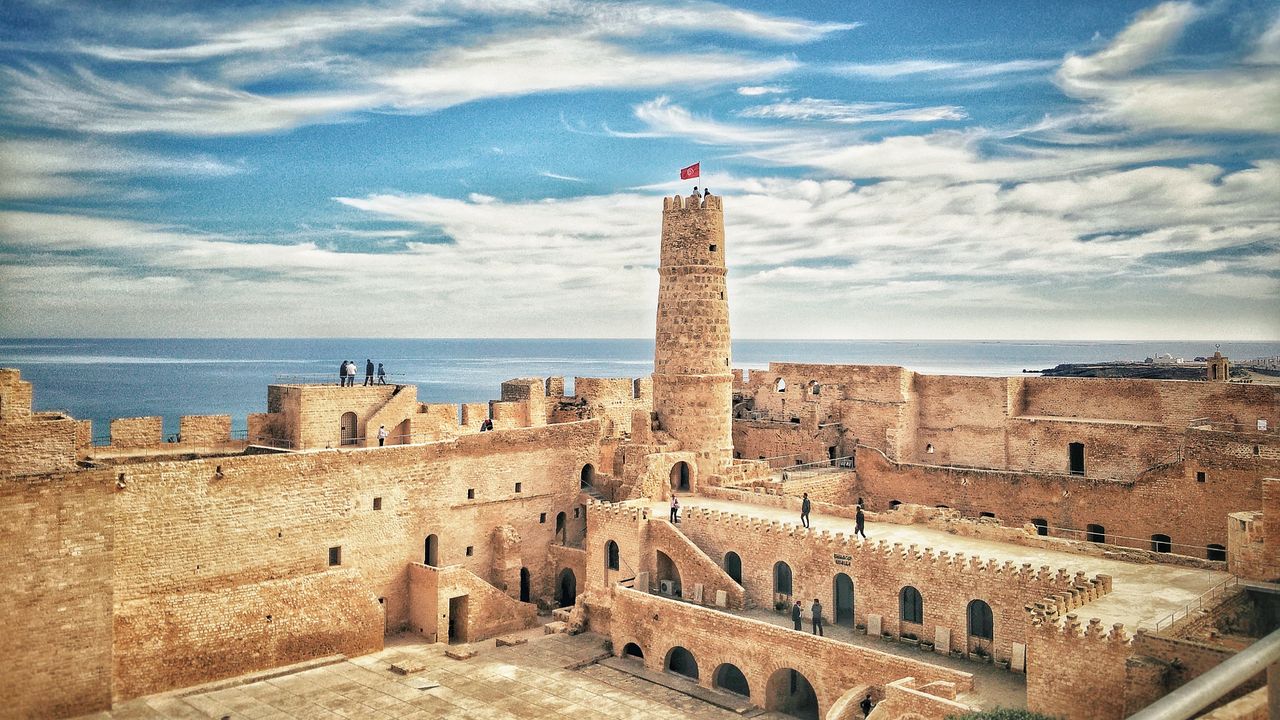
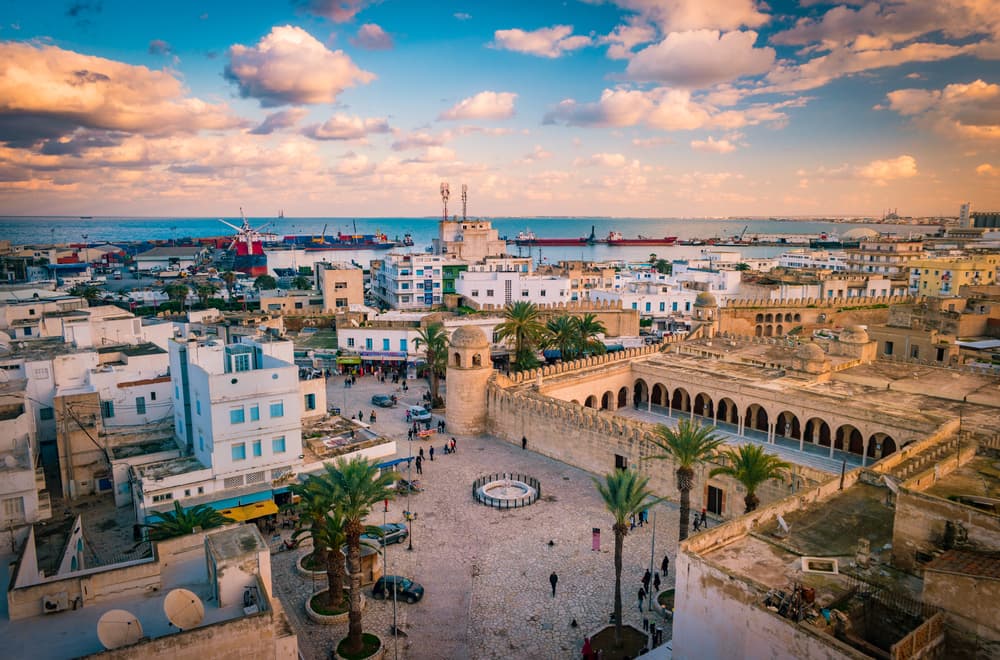
Sousse's medina, enclosed by Aghlabid ramparts from the 9th century, concentrates the Great Mosque, the Kasbah converted into an archaeological museum, and the ribat — a monastic fortress overlooking the sea. The souks offer textiles, pottery and spices. Along Habib Bourguiba Avenue stretches the modern city with its cafés and pleasure marina.
History and context
Founded by the Phoenicians as Hadrumetum, Sousse became a prosperous Roman city before being conquered by the Vandals and then the Byzantines. The Aghlabids renamed it Susa in the 9th century and built the ribat and the Great Mosque there. The city then experienced Fatimid, Zirid, Norman and Ottoman rule, each leaving an architectural imprint visible today.
Highlights of your visit
The Ribat
Built around 821, this ribat is one of the best-preserved in the Islamic world. From its watchtower, views encompass the medina and the Mediterranean Sea. The interior houses a prayer room and cells of monk-soldiers. Admission is charged; hours vary by season.
The Great Mosque
Built in the 9th century, it features a courtyard with arcades characteristic of Aghlabid architecture. Non-Muslims may access the courtyard but not the prayer hall. Its simplicity contrasts with more ornate Ottoman mosques.
The Kasbah Archaeological Museum
Housed in the medieval fortress, this museum holds one of Tunisie's most important collections of Roman mosaics, from regional excavations. The Medusa mosaic is particularly remarkable. Admission is charged.
The catacombs
Sousse possesses a network of early Christian catacombs among North Africa's most extensive, with several kilometres of galleries and thousands of burials dating from the 3rd–4th centuries. Part is open to visitors.
The beach and marina
The northern waterfront, towards the Port El Kantaoui hotel zone, offers fine sandy beaches. Port El Kantaoui, about ten kilometres away, is a pleasure marina built in the 1970s, with shops and restaurants.
Etiquette and visiting rules
- Cover shoulders and knees to enter the Great Mosque and ribat.
- Remove your shoes before entering the mosque's prayer hall.
- Avoid prayer times when visiting places of worship.
- In the souks, negotiation is common but remain respectful.
Photography tips
Golden morning light is ideal for photographing the ramparts and ribat from the sea. The Great Mosque courtyard offers fine perspectives mid-morning. In the souks, always ask permission before photographing merchants. Museum mosaics are best rendered without flash.
Location and access
Sousse lies on Tunisie's eastern coast, in the governorate of the same name. The central station connects to Tunis in approximately two hours. Sahel Rail serves Monastir in about twenty minutes and Mahdia in approximately one hour. Louages (shared taxis) link Sousse to Kairouan, about 60 km west. The medina is accessible on foot from the station; the Kasbah is on a slight rise but manageable.
Nearby attractions
- Monastir — Bourguiba's birthplace, with its ribat and presidential mausoleum, about twenty kilometres south.
- Kairouan — the fourth holiest city in Islam, home to the Great Mosque of Okba and its Aghlabid pools, approximately 60 km away.
- El Jem — Roman amphitheatre among the world's best-preserved, approximately 60 km south.
- Mahdia — medieval city on a peninsula, known for its medina and silk fabrics, about 75 km away.
- Port El Kantaoui — tourist marina with beaches and restaurants, about ten kilometres north.
Want to discover this destination?
Our local advisors design your tailor-made trip.